
September 7, 2016 NHTSA CAMPAIGN NUMBER: 16V647000
Suction Pump may Allow Fuel into the EVAP System
As fuel accumulates in the EVAP system, it may leak out through the charcoal canister filter element. A fuel leak in the presence of an ignition source increases the risk of a fire.
NHTSA Campaign Number: 16V647
Manufacturer Volkswagen Group of America, Inc.
Components FUEL SYSTEM, GASOLINE, ENGINE AND ENGINE COOLING
Potential Number of Units Affected 110,042
Summary
Volkswagen Group of America, Inc. (Volkswagen) is recalling certain model year 2015-2016 Volkswagen Golf, Golf SportWagen, GTI, Audi A3 sedan and A3 Cabriolet vehicles. Due to a problem with the suction pump inside the fuel tank, fuel may flow into the evaporative emissions (EVAP) system.
Remedy
Volkswagen will notify owners, and dealers will replace the suction pump, free of charge. The recall began November 2016. Volkswagen owners may contact Volkswagen customer service at 1-800-893-5298, Audi owners may contact Audi customer service at 1-800-253-2834. Volkswagen’s numbers for this recall are 20Y6 and 20Y5.
Notes
Owners may also contact the National Highway Traffic Safety Administration Vehicle Safety Hotline at 1-888-327-4236 (TTY 1-800-424-9153), or go to www.safercar.gov.
Check if your Volkswagen has a Recall
Safety Recall
Code: 20Y5
Suction Pump
December 21, 2016
Affected Vehicles
U.S.A.: Certain 2015-2016 MY Audi A3 Sedan & A3 Cabriolet
Problem Description
The suction pump inside the fuel tank designed to purge fuel from the evaporative emissions (EVAP) system may have been damaged during assembly. This could cause fuel to flow directly into the EVAP system which could, over time, accumulate and cause a leak through the charcoal canister filter element. Leaking fuel, in the presence of an ignition source, may result in a fire.
Corrective Action
Replace the suction pump inside the fuel tank.
Precautions
If a fuel smell is detected in the vehicle, customers should immediately contact an authorized Audi dealer to have the vehicle inspected.
Additionally, customers may experience refueling issues (early stopping of the fuel nozzle and fuel spillback) when fuel accumulates in the EVAP system. If this happens, customers should immediately contact an authorized Audi dealer to have the vehicle inspected.
Parts Information
Parts will be allocated prior to owner notification.
- Targeted allocation will be used for 5Q0201029 (suction pump).
Owner Notification
Owner notification took place in October 2016. Owner letter examples are included in this bulletin for your reference.
Chronology :
July/Aug 2015: First failures were reported from the field and investigation was initiated.
Oct/Nov. 2015: Decrease of reported failures was noted and early failure of a limited number of components assumed. Failures were traced to automatic assembly process at supplier, possibly pre-damaging seal rings.
Nov 2015: Assembly process was changed at supplier, field monitoring concluded.
Apr/May 2016: Increase of failures observed in the field. Vast majority reported from Puerto Rico. Analysis initiated as to why only Puerto Rico seems affected.
June/July 2016: High amount of aromatic compounds in Puerto Rico fuel identified as cause for excess failures.
Additional failures observed in mainland USA.
August 26, 2016: The matter was brought to Volkswagen’s product safety committee and the presence of a defect was determined.
August 29, 2016: The matter was brought to Audi’s product safety committee and the presence of a defect was determined.
6 Affected Products
Vehicles
| MAKE | MODEL | YEAR |
| AUDI | A3 | 2015-2016 |
| VOLKSWAGEN | GOLF | 2015-2016 |
| VOLKSWAGEN | GTI | 2015-2016 |
30 Associated Documents
Owner Notification Letter(Part 577)
RCONL-16V647-9723.pdf 41.337KB
Manufacturer Notices(to Dealers,etc)
Manufacturer Notices(to Dealers,etc)
Manufacturer Notices(to Dealers,etc)
Recall 573 Report – Amendment 1
RCLRPT-16V647-2150.PDF 216.948KB
Manufacturer Notices(to Dealers,etc)
Manufacturer Notices(to Dealers,etc)
Remedy Instructions and TSB
RCRIT-16V647-4450.pdf 1486.245KB
Remedy Instructions and TSB
RCRIT-16V647-6323.pdf 1635.169KB
Remedy Instructions and TSB
RCRIT-16V647-6375.pdf 1077.481KB
Recall 573 Report – Amendment 2
RCLRPT-16V647-4775.PDF 217.689KB
Remedy Instructions and TSB
RCRIT-16V647-1179.pdf 1328.211KB
Defect Notice 573 Report
RCLRPT-16V647-1237.pdf 215.775KB
Manufacturer Notices(to Dealers,etc)
Remedy Instructions and TSB
RCRIT-16V647-9389.pdf 1074.902KB
Manufacturer Notices(to Dealers,etc)
Manufacturer Notices(to Dealers,etc)
ISSUED Owner Notification Letter(Part 577)
RCONL-16V647-9049.pdf 33.337KB
ISSUED Owner Notification Letter(Part 577)
RCONL-16V647-7194.pdf 35.258KB
ISSUED Owner Notification Letter(Part 577)
RCONL-16V647-9229.pdf 26.686KB
Remedy Instructions and TSB
RCRIT-16V647-3414.pdf 1329.857KB
Interim Owner Notification Letter(Part 577)
RIONL-16V647-4851.pdf 34.595KB
Interim Owner Notification Letter(Part 577)
RIONL-16V647-9550.pdf 27.247KB
Recall Acknowledgement
RCAK-16V647-1476.pdf 247.802KB
Recall Quarterly Report #1, 2016-4
RCLQRT-16V647-2342.PDF 214.554KB
Recall Quarterly Report #2, 2017-1
RCLQRT-16V647-4623.PDF 214.655KB
Recall Quarterly Report #4, 2017-3
RCLQRT-16V647-0878.PDF 214.852KB
Recall Quarterly Report #3, 2017-2
RCLQRT-16V647-6869.PDF 214.764KB
Recall Quarterly Report #5, 2017-4
RCLQRT-16V647-8967.PDF 214.975KB
Recall Quarterly Report #6, 2018-1
RCLQRT-16V647-8369.pdf 215.059KB
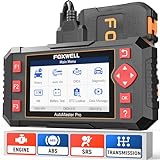
- [Easy to Use—Work Out of the Box] + [FOXWELL 2026 New Version] FOXWELL NT604 Elite scan tool is the 2026 new version from FOXWELL, designed for car owners who want to figure out the cause of issues before fixing car problems by scanning common systems like ABS, SRS, engine, and transmission. The NT604 Elite obd2 scanner diagnostic tool comes with the latest software—no need to waste time downloading software first. Plug the scanner into the OBDII port with OBDII cable to start the diagnosis.
- [Affordable] + [Reliable Car Health Monitor] Will you be confused what happens when the warning light of ABS/SRS/transmission/check engine flashes? Instead of taking your cars to dealership, this FOXWELL scanner will help you do a thorough scanning and detection for your cars and pinpoint the root cause. Note:The device is a diagnostic tool, not a repair tool. To turn off a warning light, you must first physically repair the issue causing it. Only then can the scanner be used to clear the corresponding fault code.
- [5 in 1 Car Diagnostic Scanner] Compared with obd scanners (50-100), NT604 Elite code scanner not only includes their OBDII diagnosis but also serves as ABS/SRS scanner, transmission and check engine code reader. When it’s an odb2 scanner, you can use it to check if your car is ready for annual test through I/M readiness menu. In addition, live data stream, built-in DTC library, data play back and print, all these features are a big plus for it. Note: doesn't support maintenance functions like reset or relearn. For the SRS system, NT604 Elite can read and clear common fault codes not caused by a crash, but crash/collision data cannot be cleared.
- [Fantastic AUTOVIN] + [No extra software fee] Through the AUTOVIN menu, this NT604 Elite car scanner allows you to get your V-IN and vehicle info rapidly, no need to take time to find your V-IN and input one by one. What's more, the NT604 Elite ABS SRS scanner supports 60+ car brands from worldwide (America/Asia/Europe). You don’t need to pay extra software fee. AUTOVIN may not work on some older vehicles or certain vehicle brands. If AUTOVIN fails, please input the vin code manually or go to the Diagnostic Menu to select your vehicle model.
- [Solid protective case KO plastic carrying bag] + [Lifetime update] Almost all same price-level car scanner diagnostic tool only offers plastic bag to hold the scanner.However, NT604 Elite automotive scanner is equipped with solid protective case, preventing your obd2 scanner from damage. Then you don’t need to pay extra money to buy a solid toolbox.

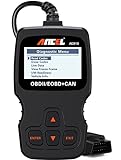
- CEL Doctor: The ANCEL AD310 is one of the best-selling OBD II scanners on the market and is recommended by Scotty Kilmer, a YouTuber and auto mechanic. It can easily determine the cause of the check engine light coming on. After repairing the vehicle's problems, it can quickly read and clear diagnostic trouble codes of emission system, read live data & hard memory data, view freeze frame, I/M monitor readiness and collect vehicle information
- Sturdy and Compact: Equipped with a 2.5 foot cable made of very thick, flexible insulation. It is important to have a sturdy scanner as it can easily fall to the ground when working in a car. The AD310 OBD2 scanner is a well-constructed mechanic tool with a sleek design. It weighs 12 ounces and measures 8.9 x 6.9 x 1.4 inches. Thanks to its compact design and light weight, transporting the device is not a problem. The buttons are clearly labelled and the screen is large and displays results clearly
- Accurate Fast and Easy to Use: The AD310 scanner can help you or your mechanic understand if your car is in good condition, provides exceptionally accurate and fast results, reads and clears engine trouble emission codes in seconds after you fixed the problem. This device will let you know immediately and fix the problem right away without any car knowledge. No need for batteries or a charger, get power directly from the OBDII Data Link Connector in your vehicle
- OBDII Protocols and Car Compatibility: Many cheap scan tools do not really support all OBD2 protocols. AD310 scanner as it can support all OBDII protocols such as KWP2000, J1850 VPW, ISO9141, J1850 PWM and CAN. This device also has extensive vehicle compatibility with 1996 US-based, 2000 EU-based and Asian cars, light trucks, SUVs, as well as newer OBD2 and CAN vehicles both domestic and foreign. Pls confirm with our customer service whether it is compatible with your vehicle before purchasing
- Home Necessity and Worthy to Own: This is an excellent code reader to travel or home with as it weighs less and it is compact in design. You can easily slide it in your backpack as you head to the garage, or put it on the dashboard, this will be a great fit for you. The AD310 is not only portable, but also accurate and fast in performance. Moreover, it covers various car brands and is suitable for people who just need a code reader to check their car

- 【Diagnose Check Engine Light in Seconds – No Mechanic Needed】The FOXWELL NT301 OBD2 scanner instantly reads & clears engine fault codes (DTCs) with one click. Simply plug into the 16-pin DLC port, turn ignition on, and get accurate results within seconds—No prior car knowledge required. Save hundreds on dealership fees by knowing exactly what’s wrong before you visit a shop. The #1 choice car scanner for DIYers and car owners who want to take control of their vehicle’s health
- 【Clear & Reset CEL with Confidence】Unlike cheap code readers that just erase codes temporarily, NT301 works like all professional vehicle code readers: It clears the check engine light only after you’ve fixed the underlying issue. If the problem isn’t fully repaired, the fault code will reappear. So you’ll never get a false pass. Use the foxwell scanner to verify your repair work and drive with peace of mind
- 【Sm-og Check Helper – Know Your Pass/Fail Status Before the Test】With dedicated one-click I/M readiness hotkeys and a simple Red-Yellow-Green LED indicator, you’ll instantly know if your vehicle is ready for annual testing. Built-in speaker provides clear audio feedback. No guesswork—just confidence before you head to the test center. One less thing to worry about when inspection day comes
- 【Advanced OBDII Modes – O- 2 Sensor & EVAP Testing】NT301 go beyond basic code reading with enhanced OBD2 modes. Run an EVAP system check to assess fuel tank condition, and use the O- 2 sensor test to optimize air-fuel ratio, boosting fuel economy, cutting em- issions, and saving you money at the pump. The code reader for cars and trucks is like having a mini em-issions lab in your glove box
- 【Live Data Graphing – Spot Engine Issues in Real Time】View and log live sensor data in easy-to-read graphs with this OBD2 scanner diagnostic tool. Monitor ox- ygen sensors, fuel trims, coolant temperature, RPM, and more to spot suspicious values instantly. This obd scanner gives you professional-grade insight without the pro price tag—a feature you won’t find on basic $20 car code readers
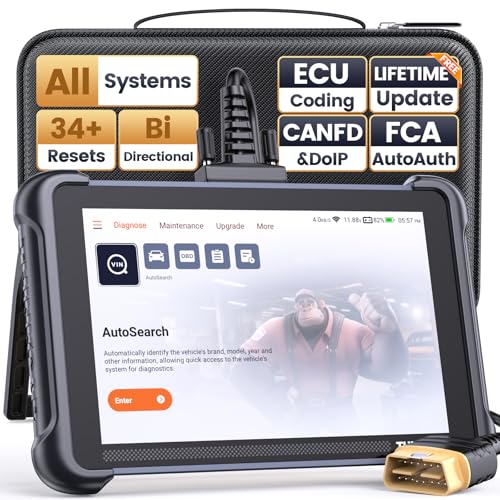
- 【Warm Tips】Dear friend, we've built this product to last, but in the unlikely event you encounter any technical hiccups, functions not support, received a used product, or just a simple question, please directly c0ntact us via Amazon Message and support @ mythinkcar. com, we're here to help and get it sorted in no time. Not sure if this product is compatible with your vehicle? Just e.mail your VIN at support @ mythinkcar. com for technical support. Note: FCA AutoAuth is a third-party service, additional cost may require.
- 【Professional Car Diagnostic Tool】Tired of renew fees? Thinkscan 689 scanner provides dealer-level advanced functions without annual fees for auto mechanics and repair shops. 34+ Services, 3000+ Active Test, ECU Coding, 140+ Brands Coverage, FCA AutoAuth, CANFD&DOIP Protocol, Component Matching, Power Balance, V.A.G Guided, Compatible with Google Chrome integration, etc. With strong hardware backing, 64G Memory, Android 10, 4-core processors, and 4150mAh battery. Thinkscan 689 brings you the best as your daily business helper and never lets you drop the ball!
- 【34+ Reset Service, Adaptation, Relearn, Calibration, Initialization, Matching】Made for workshops, Thinkscan 689 scanner provides 34+ services for worldwide vehicles: such as Gear/SAS/EPB/TPMS/D.P.F/BMS/ETS/Oil/Brake/AFS/GEARB0X/SUNROOF/SUS Reset, ABS Bleed, Injector coding, etc. Warm tips: Compatibility varies by car model, please reach out to us directly to make sure it works well on your cars.
- 【Real Active Test】Thinkscan 689 scan tool features over 3000+ full bi-directional control ability, to send commands to vehicle’s systems/components, to verify system input/output without using the vehicle's controls, e.g. turn on the radiator fan, modulate the throttle, open/close windows, operate mirrors, Injector Buz Test, turn on interior&exterior lights, sound horn, test door lock actuators, turn on/off front/rear side ACM Solenoid, Vehicle level position calibration, Wheel Speed Sensor Supply.
- 【Comprehensive Solutions with Advanced Features】Take your vehicle customization to the next level with the Thinkscan 689's advanced ECU coding capabilities. This scan tool provides power balance, PMI, unlock hidden features and enhance performance by activating dormant functions, customizing OE settings, matching replaced components, and reprogramming adaptive data to elevate your driving experience. Note: Compatibility varies by car models, please check before order.
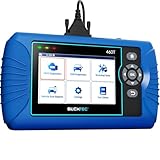
- [All System Diagnostics, Professional-Level Scanner] - BLCKTEC 460T is the ultimate OBD2 diagnostic tool for home mechanics and professionals. It supports all 10 OBD2 modes, reads and clears Engine/Transmission/ABS/SRS codes, performs All-System Diagnostics, offers workshop reset tools, and provides real-time live data. It helps you pinpoint issues, assess your car's condition, and prepare for SMOG checks with ease. NOTE: Function availability depends on your vehicle. Before you buy, be sure to use the Compatibility Checker on BLCKTEC website or contact our customer support to verify that the features you need are supported for your vehicle’s specific year, make, and model.
- [12+ Most Popular Reset Functions] - BLCKTEC 460T OBD2 scanner offers 12+ dealer-level service functions, including Oil Maintenance Reset, ABS Bleeding, EPB Reset, SAS(Steering Angle Sensor) Recalibration, DPF(Diesel Particulate Filter) Reset, Throttle Body Relearn, Battery Reset/Initialization, TPMS Relearn, Transmission Reset, Fluid Change Reset, Maintenance Reset and more, enabling you to perform workshop services like a pro. NOTE: Function availability depends on your vehicle. Be sure to use the Compatibility Checker on BLCKTEC website to verify that the features you need are supported for your vehicle.
- [Real-Time OBD2 and OEM Live Data, Freeze Frame Data] - BLCKTEC 460T helps diagnose vehicle issues when warning lights like Check Engine Light or ABS/SRS Light appear. It offers detailed DTC info, ECU Freeze Frame Data, and real-time OBD2 and advanced OEM live data, including Engine, Transmission, ABS, SRS, and more, making it easy to diagnose and resolve vehicle problems. You can view, graph, record, replay, and overlay up to four live data streams in a single graph for better analysis.
- [AutoVIN, AutoReLink, AutoScan, 3X Faster] - Equipped with AutoVIN technology, 460T automatically retrieves the VIN to save you time. Its AutoScan and AutoReLink features scan all of the vehicle's ECUs and detect any fault codes immediately after you plug the scanner into the vehicle's OBD2 port - no button presses required. Additionally, it regathers DTC and I/M readiness information every 30 seconds, simplifying monitor tests. 460T's advanced technology makes it 3X faster than other products.
- [Get RepairSolutions2, the #1 Auto Repair App for Free] - When paired with RepairSolutions2(RS2) App, 460T becomes even more powerful. RS2's Verified Fix Database built by master technicians, provides the parts needed for the repair. Additionally, RS2 gives you access to OEM warranty info, maintenance schedules, TSB, and dealership recall info, making car care easier than ever. RS2 is free with no subscription fees and it stores your car scan reports in the cloud, allowing you to access, share, or print them anytime and anywhere.
SEOCONTENT-START
If you are the lessor and registered owner of the vehicle identified in this action, the law requires you to forward this letter immediately via
first-class mail to the lessee within ten (10) days of receipt. If you have changed your address or sold the vehicle, please fill out the enclosed
prepaid Owner Reply card and mail it to us so we can update our records.
20Y5 USA_INTERIM
IMPORTANT SAFETY RECALL
This notice applies to your vehicle:
NHTSA: 16V647
IMPORTANT!
Information about Safety Recall 20Y5 – Suction Pump
Your vehicle is affected by the safety recall described in this letter; however, due to
limited parts supply, your dealer may not be able to perform the recall work for you at
this time. In the interim, if you have any concerns about driving your vehicle, or if you smell
fuel in the vehicle, make an appointment with your authorized Audi dealer to have the vehicle
inspected/repaired without delay.
This notice is sent to you in accordance with the National Traffic and Motor Vehicle Safety Act.
Audi has decided that a defect, which relates to motor vehicle safety, exists in certain 2015-2016
model year Audi A3 Sedan and A3 Cabriolet vehicles. Our records show that you are the owner
of a vehicle affected by this recall.
Recall Description: On certain vehicles, the suction pump inside the fuel tank designed to purge
fuel from the evaporative emissions (EVAP) system may have been damaged during assembly.
This could cause fuel to flow directly into the EVAP system which could, over time, accumulate
and cause a leak through the charcoal canister filter element. Leaking fuel, in the presence of an
ignition source, could lead to a fire causing injury and/or damage to property.
Precautions You Should Take: If you smell fuel in the vehicle, make an appointment with your
authorized Audi dealer to have the vehicle inspected without delay.
Additionally, you may experience refueling issues (early stopping of the fuel nozzle and fuel
spillback) when fuel accumulates in the EVAP system. If this happens, immediately contact the
nearest authorized Audi dealer to have the vehicle inspected.
If you should have any questions about this communication, please contact Audi Customer
Experience at 1-800-253-2834 or via our “Contact Us” page at www.audiusa.com.
To check your vehicle’s eligibility for repair under this or any other recall/service campaign,
please visit the Recall/Service Campaign Lookup tool at www.audiusa.com and enter your
Vehicle Identification Number (VIN).
If you still cannot obtain satisfaction, you may file a complaint with: The Administrator, National
Highway Traffic Safety Administration, 1200 New Jersey Avenue, SE., Washington, DC 20590; or
call the toll-free Vehicle Safety Hotline at 1-888-327-4236 (TTY: 1-800-424-9153); or go to
http://www.safercar.gov.
We apologize for any inconvenience this matter may cause; however we are taking this action to
help ensure your safety and continued satisfaction with your vehicle.
Sincerely,
Audi Customer Protection
Audi of America, Inc.
3800 Hamlin Road
Auburn Hills, MI 48326
+1 800 253 2834
www.audiusa.com
Audi of America, Inc.
**************************************************************************************************************
The repair information in this document is intended for use only by skilled technicians who have the proper tools, equipment and training to correctly and safely maintain your vehicle. These
procedures are not intended to be attempted by “do-it-yourselfers,” and you should not assume this document applies to your vehicle, or that your vehicle has the condition described. To
determine whether this information applies, contact an authorized Audi dealer. 2016 Audi of America, Inc. and Audi Canada. All Rights Reserved.
December 2016 20Y5 Page 1 of 35
Safety Recall
Code: 20Y5
REVISION
Subject
Suction Pump
Release Date
December 21, 2016
Revision Summary
Certain work instruction steps have been modified to help technicians avoid consequential damage during this repair.
Affected Vehicles
U.S.A.: Certain 2015-2016 MY Audi A3 Sedan & A3 Cabriolet
Canada: Certain 2015-2016 MY Audi A3 Sedan
Check Campaigns/Actions screen in Elsa on the day of repair to verify that a VIN qualifies for repair under this action. Elsa is the only valid campaign inquiry & verification source.
Campaign status must show “open.”
If Elsa shows other open action(s), inform your customer so that the work can also be completed at the same time the vehicle is in the workshop for this campaign.
Problem Description
The suction pump inside the fuel tank designed to purge fuel from the evaporative emissions (EVAP) system may have been damaged during assembly. This could cause fuel to flow directly into the EVAP system which could, over time, accumulate and cause a leak through the charcoal canister filter element. Leaking fuel, in the presence of an ignition source, may result in a fire.
Corrective Action
Replace the suction pump inside the fuel tank.
Precautions
If a fuel smell is detected in the vehicle, customers should immediately contact an authorized Audi dealer to have the vehicle inspected.
Additionally, customers may experience refueling issues (early stopping of the fuel nozzle and fuel spillback) when fuel accumulates in the EVAP system. If this happens, customers should immediately contact an authorized Audi dealer to have the vehicle inspected.
Parts Information
Parts will be allocated prior to owner notification.
• Targeted allocation will be used for 5Q0201029 (suction pump).
• Upper order limits will be used for 1J0919133B (seal). If your dealership is at the weekly Upper Order Limit, submit requests for additional parts via email to [email protected].
Code Visibility
On or about October 13, 2016, affected vehicles were listed on the Inventory Vehicle Open Campaign Action report under My Dealership Reports (found on www.accessaudi.com & OMD Web). A list was not posted for dealers who did not have any affected vehicles.
On or about October 13, 2016, this campaign code showed open on affected vehicles in Elsa.
On or about October 13, 2016, affected vehicles were identified with this campaign code in the VIN Lookup tool at www.audiusa.com and on the NHTSA VIN lookup tool at www.safercar.gov.
Owner Notification
Owner notification took place in October 2016. Owner letter examples are included in this bulletin for your reference.
Additional Information
Please alert everyone in your dealership about this action, including Sales, Service, Parts and Accounting personnel. Contact Warranty if you have any questions.
The information in this document is intended for use only by skilled technicians who have the proper tools, equipment and training to correctly and safely maintain your vehicle. These procedures
are not intended to be attempted by “do-it-yourselfers,” and you should not assume this document applies to your vehicle, or that your vehicle has the condition described. To determine whether
this information applies, contact an authorized Volkswagen dealer. 2016 Volkswagen Group of America, Inc. and Volkswagen Canada. All Rights Reserved.
December 2016 20Y5 Page 2 of 35
IMPORTANT REMINDER ON VEHICLES AFFECTED BY SAFETY & COMPLIANCE RECALLS
New Vehicles in Dealer Inventory: It is a violation of Federal law for a dealer to deliver a new motor vehicle or any new or used item of motor vehicle equipment (including a tire) covered by this notification under a sale or lease until the defect or noncompliance is remedied. By law, dealers must correct, prior to delivery for sale or lease, any vehicle that fails to comply with an applicable Federal Motor Vehicle Safety Standard or that contains a defect relating to motor vehicle safety.
Pre-Owned Vehicles in Dealer Inventory: Dealers should not deliver any pre-owned vehicles in their inventory which are involved in a safety or compliance recall until the defect has been remedied.
Dealers must ensure that every affected inventory vehicle has this campaign completed before delivery to consumers.
The repair information in this document is intended for use only by skilled technicians who have the proper tools, equipment and training to correctly and safely maintain your vehicle. These
procedures are not intended to be attempted by “do-it-yourselfers,” and you should not assume this document applies to your vehicle, or that your vehicle has the condition described. To
determine whether this information applies, contact an authorized Audi dealer. 2016 Audi of America, Inc. and Audi Canada. All Rights Reserved.
December 2016 20Y5 Page 3 of 35
Claim Entry Instructions
After campaign has been completed, enter claim as soon as possible to help prevent work from being duplicated elsewhere. Attach the Elsa screen print showing action open on the day of repair to the repair order.
If customer refused campaign work:
U.S. dealers: Submit the request through Audi Warranty Online under the Campaigns/Update option.
Canada dealers: Fax repair order to Warranty at (905) 428-4811.
Service Number
20Y5
Damage Code
0099
Parts Vendor Code
002
Claim Type
Sold vehicle: 7 10
Unsold vehicle: 7 90
Causal Indicator
Mark suction pump as causal part*
Vehicle Wash/Loaner
Do not claim wash/loaner under this action
Criteria I.D.
8V
Replace suction pump.
Labor operation: 2066 23 99 110 T.U.
Quantity
Part Number
Description
1
5Q0201029
Suction Pump*
1
1J0919133B
Seal
The repair information in this document is intended for use only by skilled technicians who have the proper tools, equipment and training to correctly and safely maintain your vehicle. These
procedures are not intended to be attempted by “do-it-yourselfers,” and you should not assume this document applies to your vehicle, or that your vehicle has the condition described. To
determine whether this information applies, contact an authorized Audi dealer. 2016 Audi of America, Inc. and Audi Canada. All Rights Reserved.
December 2016 20Y5 Page 4 of 35
Customer Letter Example (USA) – INTERIM
This notice applies to your vehicle:
NHTSA: 16V647
IMPORTANT!
Information about Safety Recall 20Y5 – Suction Pump
Your vehicle is affected by the safety recall described in this letter; however, due to limited parts supply, your dealer may not be able to perform the recall work for you at this time. In the interim, if you have any concerns about driving your vehicle, or if you smell fuel in the vehicle, make an appointment with your authorized Audi dealer to have the vehicle inspected/repaired without delay.
This notice is sent to you in accordance with the National Traffic and Motor Vehicle Safety Act. Audi has decided that a defect, which relates to motor vehicle safety, exists in certain 2015-2016 model year Audi A3 Sedan and A3 Cabriolet vehicles. Our records show that you are the owner of a vehicle affected by this recall.
Recall Description: On certain vehicles, the suction pump inside the fuel tank designed to purge fuel from the evaporative emissions (EVAP) system may have been damaged during assembly. This could cause fuel to flow directly into the EVAP system which could, over time, accumulate and cause a leak through the charcoal canister filter element. Leaking fuel, in the presence of an ignition source, could lead to a fire causing injury and/or damage to property.
Precautions You Should Take: If you smell fuel in the vehicle, make an appointment with your authorized Audi dealer to have the vehicle inspected without delay.
Additionally, you may experience refueling issues (early stopping of the fuel nozzle and fuel spillback) when fuel accumulates in the EVAP system. If this happens, immediately contact the nearest authorized Audi dealer to have the vehicle inspected.
If you should have any questions about this communication, please contact Audi Customer Experience at 1-800-253-2834 or via our “Contact Us” page at www.audiusa.com.
To check your vehicle’s eligibility for repair under this or any other recall/service campaign, please visit the Recall/Service Campaign Lookup tool at www.audiusa.com and enter your Vehicle Identification Number (VIN).
If you still cannot obtain satisfaction, you may file a complaint with: The Administrator, National Highway Traffic Safety Administration, 1200 New Jersey Avenue, SE., Washington, DC 20590; or call the toll-free Vehicle Safety Hotline at 1-888-327-4236 (TTY: 1-800-424-9153); or go to http://www.safercar.gov.
We apologize for any inconvenience this matter may cause; however we are taking this action to help ensure your safety and continued satisfaction with your vehicle.
Sincerely,
Audi Customer Protection
The repair information in this document is intended for use only by skilled technicians who have the proper tools, equipment and training to correctly and safely maintain your vehicle. These
procedures are not intended to be attempted by “do-it-yourselfers,” and you should not assume this document applies to your vehicle, or that your vehicle has the condition described. To
determine whether this information applies, contact an authorized Audi dealer. 2016 Audi of America, Inc. and Audi Canada. All Rights Reserved.
December 2016 20Y5 Page 5 of 35
Customer Letter Example (USA) – LAUNCH
This notice applies to your vehicle:
NHTSA:
Subject: Safety Recall 20Y5 – Suction Pump
Certain 2015-2016 Model Year Audi A3 Sedan & Audi A3 Cabriolet Vehicles
Dear Audi Owner,
This notice is sent to you in accordance with the National Traffic and Motor Vehicle Safety Act. Audi has decided that a defect, which relates to motor vehicle safety, exists in certain 2015-2016 model year Audi A3 Sedan and Audi A3 Cabriolet vehicles. Our records show that you are the owner of a vehicle affected by this action.
What is the issue?
The suction pump inside the fuel tank designed to purge fuel from the evaporative emissions (EVAP) system may have been damaged during assembly. This could cause fuel to flow directly into the EVAP system which could, over time, accumulate and cause a leak through the charcoal canister filter element. Leaking fuel, in the presence of an ignition source, may result in a fire.
What will we do?
To help correct this defect, your authorized Audi dealer will replace the suction pump inside the fuel tank. This work will take less than two hours to complete and will be performed for you free of charge.
What should you do?
Please contact your authorized Audi dealer without delay to schedule this recall repair. For your convenience, you can also visit www.audiusa.com and click on the “Find a Dealer” link to locate a dealer near you and schedule this service.
Precautions you should take
If you smell fuel in the vehicle, immediately contact the nearest authorized Audi dealer to have the vehicle inspected.
Additionally, you may experience refueling issues (early stopping of the fuel nozzle and fuel spillback) when fuel accumulates in the EVAP system. If this happens, immediately contact the nearest authorized Audi dealer to have the vehicle inspected.
Lease vehicles and address changes
If you are the lessor and registered owner of the vehicle identified in this action, the law requires you to forward this letter immediately via first-class mail to the lessee within ten (10) days of receipt. If you have changed your address or sold the vehicle, please fill out the enclosed prepaid Owner Reply card and mail it to us so we can update our records.
Reimbursement of Expenses
If you have previously paid for repairs relating to the condition described in this letter, the enclosed form explains how to request reimbursement. We would be pleased to review your reimbursement request.
Can we assist you further?
If your authorized Audi dealer fails or is unable to complete this work free of charge within a reasonable time, please contact Audi Customer Experience at 1-800-253-2834 or via our “Contact Us” page at www.audiusa.com.
Checking your vehicle for open Recalls and Service Campaigns
To check your vehicle’s eligibility for repair under this or any other recall/service campaign, please visit the Recall/Service Campaign Lookup tool at www.audiusa.com and enter your Vehicle Identification Number (VIN).
If you still cannot obtain satisfaction, you may file a complaint with: The Administrator, National Highway Traffic Safety Administration, 1200 New Jersey Avenue, SE., Washington, DC 20590; or call the toll-free Vehicle Safety Hotline at 1-888-327-4236 (TTY: 1-800-424-9153); or go to http://www.safercar.gov.
We apologize for any inconvenience this matter may cause; however we are taking this action to help ensure your safety and continued satisfaction with your vehicle. Thank you for your continued loyalty!
Sincerely,
Audi Customer Protection
The repair information in this document is intended for use only by skilled technicians who have the proper tools, equipment and training to correctly and safely maintain your vehicle. These
procedures are not intended to be attempted by “do-it-yourselfers,” and you should not assume this document applies to your vehicle, or that your vehicle has the condition described. To
determine whether this information applies, contact an authorized Audi dealer. 2016 Audi of America, Inc. and Audi Canada. All Rights Reserved.
December 2016 20Y5 Page 6 of 35
Customer Letter Example (CANADA) – INTERIM
This notice applies to your vehicle:
IMPORTANT!
Information about Safety Recall 20Y5 – Suction Pump
Your vehicle is affected by the safety recall described in this letter; however, due to limited parts supply, your dealer may not be able to perform the recall work for you at this time. In the interim, if you have any concerns about driving your vehicle, or if you smell fuel in the vehicle, make an appointment with your authorized Audi dealer to have the vehicle inspected/repaired without delay.
This notice is sent to you in accordance with the requirements of the Motor Vehicle Safety Act. Audi has decided that a defect, which relates to motor vehicle safety, exists in certain 2015-2016 model year Audi A3 Sedan vehicles. Our records show you are the owner of a vehicle affected by this recall.
Recall Description: On certain vehicles, the suction pump inside the fuel tank designed to purge fuel from the evaporative emissions (EVAP) system may have been damaged during assembly. This could cause fuel to flow directly into the EVAP system which could, over time, accumulate and cause a leak through the charcoal canister filter element. Leaking fuel, in the presence of an ignition source, could lead to a fire causing injury and/or damage to property.
Precautions You Should Take: If you smell fuel in the vehicle, make an appointment with your authorized Audi dealer to have the vehicle inspected without delay. If diagnosis confirms that your vehicle has the recall issue as described in this letter, we will cover the cost of the repair at no expense to you.
Additionally, you may experience refueling issues (early stopping of the fuel nozzle and fuel spillback) when fuel accumulates in the EVAP system. If this happens, immediately contact the nearest authorized Audi dealer to have the vehicle inspected.
If you should have any questions about this communication, please contact Audi Customer Relations Monday through Friday from 8AM to 8PM EST at 1-800-822-2834 or via our “Contact Audi Canada” page at www.audi.ca.
We apologize for any inconvenience this matter may cause; however we are taking this action to help ensure your safety and continued satisfaction with your vehicle.
Sincerely,
Audi Customer Protection
The repair information in this document is intended for use only by skilled technicians who have the proper tools, equipment and training to correctly and safely maintain your vehicle. These
procedures are not intended to be attempted by “do-it-yourselfers,” and you should not assume this document applies to your vehicle, or that your vehicle has the condition described. To
determine whether this information applies, contact an authorized Audi dealer. 2016 Audi of America, Inc. and Audi Canada. All Rights Reserved.
December 2016 20Y5 Page 7 of 35
Customer Letter Example (CANADA) – LAUNCH
This notice applies to your vehicle:
Subject: Safety Recall 20Y5 – Suction Pump
Certain 2015-2016 Model Year Audi A3 Sedan
Dear Audi Owner,
This notice is sent to you in accordance with the requirements of the Motor Vehicle Safety Act. Audi has decided that a defect, which relates to motor vehicle safety, exists in certain 2015-2016 model year Audi A3 Sedan vehicles. Our records show that you are the owner of a vehicle affected by this action.
What is the issue?
The suction pump inside the fuel tank designed to purge fuel from the evaporative emissions (EVAP) system may have been damaged during assembly. This could cause fuel to flow directly into the EVAP system which could, over time, accumulate and cause a leak through the charcoal canister filter element. Leaking fuel, in the presence of an ignition source, may result in a fire.
What will we do?
To help correct this defect, your authorized Audi dealer will replace the suction pump inside the fuel tank. This work will take less than two hours to complete and will be performed for you free of charge.
What should you do?
Please contact your authorized Audi dealer without delay to schedule this recall repair.
Precautions you should take
If you smell fuel in the vehicle, immediately contact the nearest authorized Audi dealer to have the vehicle inspected.
Additionally, you may experience refueling issues (early stopping of the fuel nozzle and fuel spillback) when fuel accumulates in the EVAP system. If this happens, immediately contact the nearest authorized Audi dealer to have the vehicle inspected.
Lease vehicles and address changes
If you are the lessor and registered owner of the vehicle identified in this action, the law requires you to forward this letter immediately via first-class mail to the lessee within ten (10) days of receipt. If you have changed your address or sold the vehicle, please fill out the enclosed prepaid Owner Reply card and mail it to us so we can update our records.
Reimbursement of Expenses
If you have previously paid for repairs relating to the condition described in this letter, the enclosed form explains how to request reimbursement. We would be pleased to review your reimbursement request.
Can we assist you further?
If your authorized Audi dealer fails or is unable to complete this work free of charge within a reasonable time, please contact Audi Customer Relations Monday through Friday from 8AM to 8PM EST at 1-800-822-2834 or via our “Contact Audi Canada” page at www.audi.ca.
We apologize for any inconvenience this matter may cause; however we are taking this action to help ensure your safety and continued satisfaction with your vehicle. Thank you for your continued loyalty!
Sincerely,
Audi Customer Protection
The repair information in this document is intended for use only by skilled technicians who have the proper tools, equipment and training to correctly and safely maintain your vehicle. These
procedures are not intended to be attempted by “do-it-yourselfers,” and you should not assume this document applies to your vehicle, or that your vehicle has the condition described. To
determine whether this information applies, contact an authorized Audi dealer. 2016 Audi of America, Inc. and Audi Canada. All Rights Reserved.
December 2016 20Y5 Page 8 of 35
Campaign Work Procedure 20Y5 Safety Recall
NOTE
Damages resulting from improper repair or failure to follow these work instructions are the dealer’s responsibility and are not eligible for reimbursement under this action.
Required Parts
Quantity
Part Number
Part Description
1
5Q0-201-029
Suction Pump
1
1J0-919-133-B
Seal
Required Tools
• Wrench – Fuel Sending Unit -T10202-
• Torque Wrench 1332 40-200Nm -VAG1332- (or equivalent)
The repair information in this document is intended for use only by skilled technicians who have the proper tools, equipment and training to correctly and safely maintain your vehicle. These
procedures are not intended to be attempted by “do-it-yourselfers,” and you should not assume this document applies to your vehicle, or that your vehicle has the condition described. To
determine whether this information applies, contact an authorized Audi dealer. 2016 Audi of America, Inc. and Audi Canada. All Rights Reserved.
December 2016 20Y5 Page 9 of 35
• Trim Removal Wedge -3409-
• VAS6150D – Diagnostic Tester (or equivalent)
• VAS 6154 – Vehicle Communication Interface (or equivalent)
The repair information in this document is intended for use only by skilled technicians who have the proper tools, equipment and training to correctly and safely maintain your vehicle. These
procedures are not intended to be attempted by “do-it-yourselfers,” and you should not assume this document applies to your vehicle, or that your vehicle has the condition described. To
determine whether this information applies, contact an authorized Audi dealer. 2016 Audi of America, Inc. and Audi Canada. All Rights Reserved.
December 2016 20Y5 Page 10 of 35
• GRX300VAS – Battery Tester/Charger (or equivalent)
• Fuel Extractor VAS5190A -VAS5190- (or equivalent)
The repair information in this document is intended for use only by skilled technicians who have the proper tools, equipment and training to correctly and safely maintain your vehicle. These
procedures are not intended to be attempted by “do-it-yourselfers,” and you should not assume this document applies to your vehicle, or that your vehicle has the condition described. To
determine whether this information applies, contact an authorized Audi dealer. 2016 Audi of America, Inc. and Audi Canada. All Rights Reserved.
December 2016 20Y5 Page 11 of 35
Repair Instruction
Section A – Check for Previous Repair
• Enter the VIN in Elsa and proceed to the “Campaign/Action” screen.
TIP
On the date of repair, print this screen and keep a copy with the repair order.
• Confirm the Campaign/Action is open . If the status is closed, no further work is required.
• Note the Applicable Criteria ID for use in determining the correct work to be done and corresponding parts associated.
Proceed to Section B
The repair information in this document is intended for use only by skilled technicians who have the proper tools, equipment and training to correctly and safely maintain your vehicle. These
procedures are not intended to be attempted by “do-it-yourselfers,” and you should not assume this document applies to your vehicle, or that your vehicle has the condition described. To
determine whether this information applies, contact an authorized Audi dealer. 2016 Audi of America, Inc. and Audi Canada. All Rights Reserved.
December 2016 20Y5 Page 12 of 35
Section B – Repair Procedure
NOTE
• Due to variations in vehicle equipment and options, the steps/illustrations in this work procedure may not identically match all affected vehicles.
• This procedure must be read in its entirety before performing the repair.
NOTE
Follow these “rules” when working on the fuel supply system:
• Thoroughly clean the connecting points and the surrounding area before loosening.
• Place the removed parts on a clean surface and cover them. Only use lint-free cloths!
• Carefully cover or seal opened components if the repair will not be done immediately.
• Only install clean parts: remove replacement parts from the packaging immediately prior to installation. Do not use parts that have been stored loose (for example, in tool boxes etc.).
• When the system is open: do not work with compressed air.
• Do not move vehicle.
• Seal off any open lines and connections immediately with plugs, for example, take from -VAS6122-.
• Protect the disconnected connectors from dirt and moisture and only connect when they are dry.
• Before starting work, place the extracting hose on an exhaust extractor that is switched on near the fuel tank assembly opening to extract fuel vapors.
WARNING
Risk for repeat repair!
It is imperative that the battery is disconnected before draining the fuel. Failing to disconnect the battery can result in fuel level sending unit faults, or fuel gauge inaccuracies. Additional diagnostic time required to perform a capacitive discharge or remove fused power to the instrument cluster to clear these faults or inaccuracies are NOT covered under this campaign.
• Move the front seats all the way forward.
o On vehicles equipped with power seats, be sure to move the front seats all the way forward before disconnecting the battery in the next step.
The repair information in this document is intended for use only by skilled technicians who have the proper tools, equipment and training to correctly and safely maintain your vehicle. These
procedures are not intended to be attempted by “do-it-yourselfers,” and you should not assume this document applies to your vehicle, or that your vehicle has the condition described. To
determine whether this information applies, contact an authorized Audi dealer. 2016 Audi of America, Inc. and Audi Canada. All Rights Reserved.
December 2016 20Y5 Page 13 of 35
• Open the vehicle hood.
• Open the battery heat protection sleeve cover to access the cover <1> on the battery ground terminal <2>.
• Loosen the nut <3> several turns and remove the battery ground terminal <2> from the negative battery post and isolate the terminal.
• Unclip and remove the covers <1> from the LATCH child seat anchors .
CAUTION
Edges on the child seat anchor cover may be sharp.
• Push the guides <1>, corresponding to cut-out, downward and disengage them from the LATCH child seat anchors <2>.
The repair information in this document is intended for use only by skilled technicians who have the proper tools, equipment and training to correctly and safely maintain your vehicle. These
procedures are not intended to be attempted by “do-it-yourselfers,” and you should not assume this document applies to your vehicle, or that your vehicle has the condition described. To
determine whether this information applies, contact an authorized Audi dealer. 2016 Audi of America, Inc. and Audi Canada. All Rights Reserved.
December 2016 20Y5 Page 14 of 35
• With both hands, grasp the rear bench seat under the seat frame.
• Pull the rear bench seat <1> up forcefully with both hands so the so the seat frame <2> on the bench seat disengages from the mounting <3>.
• Repeat the procedure on the other side of the rear bench seat .
• Disengage the bench seat from the backrest frame and remove from the vehicle.
NOTE
Place the seat bench in a clean location where it will not be damaged. Damage to the seat bench is not covered under this action.
WARNING
Risk for repeat repair!
It is imperative that the exact amount of fuel removed from the fuel tank is reinstalled into the fuel tank at the end of this operation. Failing to reinstall the same of amount of fuel that was extracted can result in fuel level sending unit faults, or fuel gauge inaccuracies. Additional diagnostic time required to perform a capacitive discharge or remove fused power to the instrument cluster to clear these faults or inaccuracies are NOT covered under this campaign.
CAUTION
Danger due to escaping fuel.
• Drain the fuel tank.
o If fuel tank is more than ¾ full, proceed to subsection 1.
o If fuel tank is less than ¾ full, proceed to subsection 2.
The repair information in this document is intended for use only by skilled technicians who have the proper tools, equipment and training to correctly and safely maintain your vehicle. These
procedures are not intended to be attempted by “do-it-yourselfers,” and you should not assume this document applies to your vehicle, or that your vehicle has the condition described. To
determine whether this information applies, contact an authorized Audi dealer. 2016 Audi of America, Inc. and Audi Canada. All Rights Reserved.
December 2016 20Y5 Page 15 of 35
Subsection 1 – Fuel Tank More Than ¾ Full
NOTE
Use only the Fuel Extractor Unit -VAS5190A- when extracting E 85 – fuel!
• Use insulating tape to mark the hose at the distance from the end of the suction hose on the -VAS5190-.
Application
Distance of
A3/Sportback with Multi-link
960 mm
A3/Sportback with Torsion Beam
1010 mm
A3 Cabriolet
765mm
• Open the fuel filler door unit.
• Clean the area around the fuel filler neck <3>.
• Remove the cap <2> for the fuel filler neck <1>.
• Attach the ground wire from the -VAS5190A- to a bare area on the body.
The repair information in this document is intended for use only by skilled technicians who have the proper tools, equipment and training to correctly and safely maintain your vehicle. These
procedures are not intended to be attempted by “do-it-yourselfers,” and you should not assume this document applies to your vehicle, or that your vehicle has the condition described. To
determine whether this information applies, contact an authorized Audi dealer. 2016 Audi of America, Inc. and Audi Canada. All Rights Reserved.
December 2016 20Y5 Page 16 of 35
• Slide the suction hose from the -VAS5190A- into the fuel tank until the previously made mark -arrow- meets the filler neck <2>.
• Drain the fuel tank as much as possible through the filler neck.
NOTE
• A valve <1> is located in the fuel tank on the lower end of the filler neck. It must not be damaged by the suction hose. Only slide the hose in as far as the mark that was made earlier .
• When no more fuel can be extracted, the fuel tank has been emptied enough so that the sensor flange can be opened safely.
• Carefully remove the suction hose.
NOTE
Do not use force to remove the suction hose if it gets stuck on the check valve. In this case, remove the fuel delivery unit and manually hold the check valve open. When doing this, make sure the arm does not come in contact with the fuel.
• Proceed to Subsection 2.
Subsection 2 – Fuel Tank Less Than ¾ Full
WARNING
• The fuel system is under high pressure.
• Risk of injury from fuel spraying out.
• Reduce the pressure before continuing procedure.
Risk of a fire due to leaking fuel.
• When the battery is connected, the door contact switch activates the fuel pump when opening the driver door. Leaking fuel can ignite and start a fire.
• Before opening the fuel system, interrupt the power supply to the fuel pump.
The repair information in this document is intended for use only by skilled technicians who have the proper tools, equipment and training to correctly and safely maintain your vehicle. These
procedures are not intended to be attempted by “do-it-yourselfers,” and you should not assume this document applies to your vehicle, or that your vehicle has the condition described. To
determine whether this information applies, contact an authorized Audi dealer. 2016 Audi of America, Inc. and Audi Canada. All Rights Reserved.
December 2016 20Y5 Page 17 of 35
• In the rear seat, unclip the sealing flange cover <1> at the tabs using the Trim Removal Wedge -3409- (or equivalent).
• Unclip the grommet <1> downward out of the cover <2>.
The repair information in this document is intended for use only by skilled technicians who have the proper tools, equipment and training to correctly and safely maintain your vehicle. These
procedures are not intended to be attempted by “do-it-yourselfers,” and you should not assume this document applies to your vehicle, or that your vehicle has the condition described. To
determine whether this information applies, contact an authorized Audi dealer. 2016 Audi of America, Inc. and Audi Canada. All Rights Reserved.
December 2016 20Y5 Page 18 of 35
• Prior to disassembly, the fuel delivery unit MUST be clean. If excessive dirt or debris is present , clean and dry the fuel delivery unit and surrounding areas as necessary.
• Unlock and disconnect the connector <1> from the sealing flange.
• If equipped, disengage the connector <2> for the parking heater Metering Pump -V54- on the sealing flange and move it to the side.
The repair information in this document is intended for use only by skilled technicians who have the proper tools, equipment and training to correctly and safely maintain your vehicle. These
procedures are not intended to be attempted by “do-it-yourselfers,” and you should not assume this document applies to your vehicle, or that your vehicle has the condition described. To
determine whether this information applies, contact an authorized Audi dealer. 2016 Audi of America, Inc. and Audi Canada. All Rights Reserved.
December 2016 20Y5 Page 19 of 35
WARNING
Fuel lines are under pressure. Danger of personal injury to eyes and skin. Wear protective eyewear and protective clothing in order to avoid injury and contact with the skin. Wrap a cloth around the connection before loosening hose connections. Open the connection carefully and release the pressure.
• Remove the fuel line connector <1> from the locking flange by pushing down on the connector, squeezing the release tab between the finger and thumb, then lifting up.
• If equipped, remove the fuel line <2> to the Metering Pump -V54- for the parking heater on the sealing flange by loosening the lower hose clamp.
NOTE
Risk for repeat repair!
• Do not use pliers or other tools on the fuel line connector(s) or damage to the connector may occur.
• Damage to the fuel line connector(s) due to improper removal/installation may cause the connector to not fasten securely upon reinstallation, causing a leak. A damaged fuel line connector requires replacement of the fuel line.
• Consequential damage to the fuel line connector(s) due to improper removal/installation is not covered under this campaign.
• Remove the locking ring using the Wrench – Fuel Sending Unit -T10202-.
• Carefully lift the fuel delivery unit flange.
The repair information in this document is intended for use only by skilled technicians who have the proper tools, equipment and training to correctly and safely maintain your vehicle. These
procedures are not intended to be attempted by “do-it-yourselfers,” and you should not assume this document applies to your vehicle, or that your vehicle has the condition described. To
determine whether this information applies, contact an authorized Audi dealer. 2016 Audi of America, Inc. and Audi Canada. All Rights Reserved.
December 2016 20Y5 Page 20 of 35
• Pull the sealing flange <2> out of the opening in the fuel tank slightly.
• Remove the seal <1> and slightly lift the fuel delivery unit flange again carefully.
NOTE
Use only the Fuel Extractor Unit -VAS5190A- when extracting E 85 – fuel!
• Attach the ground wire of the -VAS5190- to a bare area on the body.
• Insert the suction hose for the -VAS5190- as deep as possible into the fuel tank.
• Extract the fuel using the -VAS5190-.
• Insert the extraction hose into the fuel delivery unit.
• Drain as much fuel as possible from the fuel delivery unit itself.
• Record the total amount of fuel extracted using the -VAS 5190- Fuel Extraction Unit on the repair order.
WARNING
Risk for repeat repair!
• It is imperative that the exact amount of fuel removed from the fuel tank is reinstalled into the fuel tank at the end of this operation.
• Failing to reinstall the same of amount of fuel that was extracted can result in fuel level sending unit faults, or fuel gauge inaccuracies.
• Additional diagnostic time required to perform a capacitive discharge or remove fused power to the instrument cluster to clear these faults or inaccuracies are NOT covered under this campaign.
• Once the fuel has been properly evacuated, carefully pull the fuel delivery unit with the fuel level sensor out through the opening in the fuel tank, using caution not to bend the floater arm on the fuel level sensor when removing.
CAUTION
Risk for repeat repair!
During removal of the fuel delivery unit, it is very easy to damage the fuel level sensor. Use caution when removing the fuel delivery unit. Damage to the fuel level sensor is not covered under this action.
The repair information in this document is intended for use only by skilled technicians who have the proper tools, equipment and training to correctly and safely maintain your vehicle. These
procedures are not intended to be attempted by “do-it-yourselfers,” and you should not assume this document applies to your vehicle, or that your vehicle has the condition described. To
determine whether this information applies, contact an authorized Audi dealer. 2016 Audi of America, Inc. and Audi Canada. All Rights Reserved.
December 2016 20Y5 Page 21 of 35
• Place a cloth underneath to catch the residual fuel, since the fuel delivery unit may still be partially filled.
• Carefully pull the fuel delivery unit <2> out of the fuel tank, release the fuel line <1> and disconnect it from the front suction line <3>.
• Lay a cloth inside the vehicle to absorb any residual fuel.
NOTE
• Follow all waste disposal regulations.
• Check the fuel tank for contamination.
NOTE
Risk for repeat repair!
• Do not use pliers or other tools on the fuel line connector <1> or damage to the connector may occur.
• Damage to the fuel line connector due to improper removal/installation may cause the connector to not fasten securely upon reinstallation, causing a leak. A damaged fuel line connector on the suction pump line requires replacement of the FUEL TANK.
• Consequential damage to the fuel tank due to connector damage from improper removal/installation is not covered under this campaign.
• After the fuel delivery unit is removed from the fuel tank opening and the suction pump line is disconnected, insert the suction hose from the -VAS 5190- Fuel Extraction Unit to remove as much additional fuel as necessary to perform the remaining operations safely and comfortably.
• Add any additional fuel removed from the fuel delivery unit and/or the bottom of the tank to the fuel volume previously recorded on the repair order.
WARNING
Danger due to fuel contacting skin
• To prevent injury or discomfort, wear proper protective gear when skin may come in contact with fuel. Proper fuel resistant gloves are advised.
• Take care when working on a vehicle that has been stored outdoors in extreme climate conditions. Fuel will not freeze when exposed to extreme cold, therefore the fuel in the tank may be well below 0°C.
The repair information in this document is intended for use only by skilled technicians who have the proper tools, equipment and training to correctly and safely maintain your vehicle. These
procedures are not intended to be attempted by “do-it-yourselfers,” and you should not assume this document applies to your vehicle, or that your vehicle has the condition described. To
determine whether this information applies, contact an authorized Audi dealer. 2016 Audi of America, Inc. and Audi Canada. All Rights Reserved.
December 2016 20Y5 Page 22 of 35
Use cold weather protective gear or equipment as necessary, drain all of the fuel out, or warm the vehicle indoors if the vehicle has been stored in an extreme climate condition before performing the next steps.
NOTE
Check the fuel tank for contamination and if any is noted use the VAS 5190 Fuel Extraction Unit to vacuum any debris from the tank. If necessary, use a lint free cloth to remove any debris once all fuel has been removed.
Replacing the suction jet pump:
TIP
• To view a short video overview on removing and reinstalling the suction pump, scan the QR code to the left.
• The QR code is for viewing the video on smartphones and tablets. Alternatively, the video can also be accessed through computer internet browsers with the link below:
https://youtu.be/O1H7_8IRTVI
The repair information in this document is intended for use only by skilled technicians who have the proper tools, equipment and training to correctly and safely maintain your vehicle. These
procedures are not intended to be attempted by “do-it-yourselfers,” and you should not assume this document applies to your vehicle, or that your vehicle has the condition described. To
determine whether this information applies, contact an authorized Audi dealer. 2016 Audi of America, Inc. and Audi Canada. All Rights Reserved.
December 2016 20Y5 Page 23 of 35
NOTE
• The fuel tank in the illustration below has been sectioned to provide a clear view of the suction valve.
• Under no circumstances should the fuel tank be altered or modified as shown below.
• Reach into the fuel tank and follow the black hose to find the suction pump <1>.
• Disconnect the rear suction line <2>:
o Push the connector further onto the suction pump.
o Press and hold the quick release connector latch in with the thumb.
o Pull the connector off (downward).
NOTE
Risk for repeat repair!
• Do not use pliers or other tools on the fuel line connectors <2 and 3> or damage to the connector may occur.
• Damage to the fuel line connector(s) due to improper removal/installation may cause the connector to not fasten securely upon reinstallation, causing a leak. A damaged fuel line connector on the front or rear suction pump line requires replacement of the FUEL TANK.
Consequential damage to the fuel tank due to connector damage from improper removal/installation is not covered under this campaign.
The repair information in this document is intended for use only by skilled technicians who have the proper tools, equipment and training to correctly and safely maintain your vehicle. These
procedures are not intended to be attempted by “do-it-yourselfers,” and you should not assume this document applies to your vehicle, or that your vehicle has the condition described. To
determine whether this information applies, contact an authorized Audi dealer. 2016 Audi of America, Inc. and Audi Canada. All Rights Reserved.
December 2016 20Y5 Page 24 of 35
• Remove the suction pump <1> off the retainer bracket <3>:
o Slightly rotate suction pump <1> away from the bracket <3>
o Remove the pump <1> from the fuel tank by gently rocking it back and forth between the fingers and thumb.
o Use caution not to damage the attached front suction line.
• Take care that the Liquid-Vapor Separator Assembly <1> does not come off of its attachment bracket when removing the Suction Jet Pump.
The repair information in this document is intended for use only by skilled technicians who have the proper tools, equipment and training to correctly and safely maintain your vehicle. These
procedures are not intended to be attempted by “do-it-yourselfers,” and you should not assume this document applies to your vehicle, or that your vehicle has the condition described. To
determine whether this information applies, contact an authorized Audi dealer. 2016 Audi of America, Inc. and Audi Canada. All Rights Reserved.
December 2016 20Y5 Page 25 of 35
NOTE
Risk for repeat repair!
• If the Liquid-Vapor Separator <1> comes loose and is not reinstalled onto the mounting bracket, a customer comeback for rattling in the fuel tank, or EVAP system faults may occur.
• The Liquid-Vapor Separator <1> can be reinstalled onto its mounting bracket <2>.
• Replacement of the fuel tank for the Liquid-Vapor Separator dislodging from the mounting bracket is not covered under this campaign.
• If the Liquid-Vapor Separator Assembly <1> comes off the mounting bracket during suction pump removal:
o Snap the Liquid-Vapor Separator <1> back into place by realigning it with the mounting bracket.
o Push down on the Liquid-Vapor Seperator to reengage the clip <2>.
• When correctly installed, the Liquid-Vapor Separator clip will be secured into its mounting bracket as shown.
NOTE
• The fuel tank does NOT require replacement if the Liquid-Vapor Separator Assembly is dislodged from its mounting bracket during removal of the Suction Jet Pump.
• Consequential damage for fuel tank replacement is not covered under this campaign for dislodged Liquid-Vapor Separator Assemblies.
The repair information in this document is intended for use only by skilled technicians who have the proper tools, equipment and training to correctly and safely maintain your vehicle. These
procedures are not intended to be attempted by “do-it-yourselfers,” and you should not assume this document applies to your vehicle, or that your vehicle has the condition described. To
determine whether this information applies, contact an authorized Audi dealer. 2016 Audi of America, Inc. and Audi Canada. All Rights Reserved.
December 2016 20Y5 Page 26 of 35
• Disconnect the front suction line <1> from the suction pump:
o Push the front suction line <1> further onto the suction pump <2>.
o Press the release <3> with the thumb, then pull the front suction line <3> off of the suction pump <2>.
• Transfer the front suction line <1> from the old suction pump <2> to the new suction pump, ensuring that the locking of the retention clip <3> is felt and/or heard.
TIP
• The red colored connector <3> on the front suction line connects to the suction pump.
• The green colored connector on the front suction line connects to the fuel delivery unit.
NOTE
Risk for repeat repair!
• Do not use pliers or other tools on the fuel line connector <3> or damage to the connector may occur.
• Damage to the fuel line connector due to improper removal/installation may cause the connector to not fasten securely upon reinstallation, causing a leak. A damaged fuel line connector on the suction pump line requires replacement of the FUEL TANK.
• Consequential damage to the fuel tank due to connector damage from improper removal/installation is not covered under this campaign.
The repair information in this document is intended for use only by skilled technicians who have the proper tools, equipment and training to correctly and safely maintain your vehicle. These
procedures are not intended to be attempted by “do-it-yourselfers,” and you should not assume this document applies to your vehicle, or that your vehicle has the condition described. To
determine whether this information applies, contact an authorized Audi dealer. 2016 Audi of America, Inc. and Audi Canada. All Rights Reserved.
December 2016 20Y5 Page 27 of 35
• Insert the new suction pump <1> into the fuel tank.
• Align the retention clip on the new suction pump <1> to the bracket <2> on the liquid-vapor seperator.
• Slide the new suction pump <1> downward onto the bracket <2>.
• Ensure that the pump is secured firmly on the bracket <2>.
Part Number
Part Description
5Q0-201-029
Suction Pump
NOTE
Use caution not to damage the attached front suction line during installation.
• Reconnect the rear suction line <2> to the suction pump <1>, ensuring that the locking of the retention clip is felt and/or heard.
• Ensure that the front suction line <3> and rear suction line <2> are firmly seated and secure by gently pulling the lines away from the suction pump.
NOTE
Risk for repeat repair!
• Do not use pliers or other tools on the fuel line connectors <2 and 3> or damage to the connector may occur.
• Damage to the fuel line connector(s) due to improper removal/installation may cause the connector to not fasten securely upon reinstallation, causing a leak. A damaged fuel line connector on the front or rear suction pump line requires replacement of the FUEL TANK.
• Consequential damage to the fuel tank due to connector damage from improper removal/installation is not covered under this campaign.
The repair information in this document is intended for use only by skilled technicians who have the proper tools, equipment and training to correctly and safely maintain your vehicle. These
procedures are not intended to be attempted by “do-it-yourselfers,” and you should not assume this document applies to your vehicle, or that your vehicle has the condition described. To
determine whether this information applies, contact an authorized Audi dealer. 2016 Audi of America, Inc. and Audi Canada. All Rights Reserved.
December 2016 20Y5 Page 28 of 35
NOTE
When reconnecting fuel lines, ensure that the locking of the retention clip is felt and/or heard.
• Carefully align the fuel delivery unit <2> to the fuel tank and reconnect the fuel line <1> to the front suction line <3>.
• Carefully guide the fuel delivery unit with the fuel level sensor through the opening into the fuel tank.
CAUTION
Risk for repeat repair!
• Be careful not to bend the fuel level sensor when installing the fuel delivery unit.
• Consequential damage to the fuel level sensor is not covered under this campaign.
• Carefully install the dry fuel delivery unit seal <1> into the opening in the fuel tank.
Part Number
Part Description
1J0-919-133-B
Seal
NOTE
The fuel delivery unit seal must be installed dry.
The repair information in this document is intended for use only by skilled technicians who have the proper tools, equipment and training to correctly and safely maintain your vehicle. These
procedures are not intended to be attempted by “do-it-yourselfers,” and you should not assume this document applies to your vehicle, or that your vehicle has the condition described. To
determine whether this information applies, contact an authorized Audi dealer. 2016 Audi of America, Inc. and Audi Canada. All Rights Reserved.
December 2016 20Y5 Page 29 of 35
NOTE
When inserting the sealing flange, the seal must not be damaged or crushed.
• Push the sealing flange <2> down against the spring force.
• Bring the sealing flange into its installation position.
• The arrow <3> on the fuel tank must point to the mark <2> on the sealing flange <1>.
• Using the -T10202-, tighten the locking ring to 110 Nm.
The repair information in this document is intended for use only by skilled technicians who have the proper tools, equipment and training to correctly and safely maintain your vehicle. These
procedures are not intended to be attempted by “do-it-yourselfers,” and you should not assume this document applies to your vehicle, or that your vehicle has the condition described. To
determine whether this information applies, contact an authorized Audi dealer. 2016 Audi of America, Inc. and Audi Canada. All Rights Reserved.
December 2016 20Y5 Page 30 of 35
• Attach the fuel line <1> to the sealing flange until it clicks into place.
• If equipped, install the fuel line <2> to the Metering Pump -V54- for the parking heater on the sealing flange.
• Connect the connector <1>.
• If equipped, engage the connector <2> for the parking heater Metering Pump -V54- on the sealing flange.
• Gently pull on the connectors to make sure they are secure.
• Reattach the grommet <1> into the cover <2>.
The repair information in this document is intended for use only by skilled technicians who have the proper tools, equipment and training to correctly and safely maintain your vehicle. These
procedures are not intended to be attempted by “do-it-yourselfers,” and you should not assume this document applies to your vehicle, or that your vehicle has the condition described. To
determine whether this information applies, contact an authorized Audi dealer. 2016 Audi of America, Inc. and Audi Canada. All Rights Reserved.
December 2016 20Y5 Page 31 of 35
• Reattach the sealing flange cover <1>.
• Install the bench seat <1> and engage the seat frame <2> on the backrest frame <3>.
• Push the rear bench seat down until it engages audibly in the mount <4>.
The repair information in this document is intended for use only by skilled technicians who have the proper tools, equipment and training to correctly and safely maintain your vehicle. These
procedures are not intended to be attempted by “do-it-yourselfers,” and you should not assume this document applies to your vehicle, or that your vehicle has the condition described. To
determine whether this information applies, contact an authorized Audi dealer. 2016 Audi of America, Inc. and Audi Canada. All Rights Reserved.
December 2016 20Y5 Page 32 of 35
• Reinstall the guides <1> to the LATCH child seat anchors <2>.
• Reinstall the covers <1> to the LATCH child seat anchors .
CAUTION
Edges on the child seat anchor cover may be sharp.
The repair information in this document is intended for use only by skilled technicians who have the proper tools, equipment and training to correctly and safely maintain your vehicle. These
procedures are not intended to be attempted by “do-it-yourselfers,” and you should not assume this document applies to your vehicle, or that your vehicle has the condition described. To
determine whether this information applies, contact an authorized Audi dealer. 2016 Audi of America, Inc. and Audi Canada. All Rights Reserved.
December 2016 20Y5 Page 33 of 35
• Open the fuel door and remove the fuel cap <2>.
• Refill the fuel tank with the same amount of fuel removed prior with the -VAS 5190- Fuel Extraction Unit.
• Verify using the sightglass on the side of the -VAS 5190- Fuel Extraction Unit that the fuel tank was filled with the same amount of fuel that was extracted before reconnecting the battery.
NOTE
Risk for repeat repair!
Failing to fill the fuel tank with the same of amount of fuel that was extracted can result in fuel level sending unit faults, or fuel gauge inaccuracies. Additional diagnostic time required to perform a capacitive discharge or remove fused power to the instrument cluster to clear these faults or inaccuracies are NOT covered under this campaign.
• Reconnect the negative battery terminal <2> to the negative battery post and tighten the nut <3> to 6 Nm.
The repair information in this document is intended for use only by skilled technicians who have the proper tools, equipment and training to correctly and safely maintain your vehicle. These
procedures are not intended to be attempted by “do-it-yourselfers,” and you should not assume this document applies to your vehicle, or that your vehicle has the condition described. To
determine whether this information applies, contact an authorized Audi dealer. 2016 Audi of America, Inc. and Audi Canada. All Rights Reserved.
December 2016 20Y5 Page 34 of 35
• Switch the ignition ON.
• Attach an appropriate VAS tester to the vehicle.
• Clear all DTCs.
• Cycle the ignition multiple times and check for fuel leaks.
• Reset customer convenience basic settings (i.e. one touch windows, instrument cluster clock, etc.).
• Proceed to section C.
The repair information in this document is intended for use only by skilled technicians who have the proper tools, equipment and training to correctly and safely maintain your vehicle. These
procedures are not intended to be attempted by “do-it-yourselfers,” and you should not assume this document applies to your vehicle, or that your vehicle has the condition described. To
determine whether this information applies, contact an authorized Audi dealer. 2016 Audi of America, Inc. and Audi Canada. All Rights Reserved.
December 2016 20Y5 Page 35 of 35
Section C – Campaign Completion Stamp
Item#: AUD4927ENG
-OR-
Item # AUD4927FRE
• Once the campaign has been completed, the technician should stamp the repair order.
• Stamps are available for ordering through the Compliance Label Ordering Portal.
• Proceed to Section D.
Section D – Parts Return/Disposal
Properly store (retain), destroy or dispose of removed parts in accordance with all state/province and local requirements, unless otherwise indicated and/or requested through the Warranty Parts Portal (WPP).
**************************************************************************************************************
20Y5 USA
IMPORTANT SAFETY RECALL
This notice applies to your vehicle:
NHTSA: 16V647
Subject: Safety Recall 20Y5 – Suction Pump
Certain 2015-2016 Model Year Audi A3 Sedan & Audi A3 Cabriolet Vehicles
Dear Audi Owner,
This notice is sent to you in accordance with the National Traffic and Motor Vehicle Safety Act.
Audi has decided that a defect, which relates to motor vehicle safety, exists in certain 2015-
2016 model year Audi A3 Sedan and Audi A3 Cabriolet vehicles. Our records show that you are
the owner of a vehicle affected by this action.
What is the issue? The suction pump inside the fuel tank designed to purge fuel from the
evaporative emissions (EVAP) system may have been damaged during
assembly. This could cause fuel to flow directly into the EVAP system
which could, over time, accumulate and cause a leak through the
charcoal canister filter element. Leaking fuel, in the presence of an
ignition source, may result in a fire.
What will we do? To help correct this defect, your authorized Audi dealer will replace the
suction pump inside the fuel tank. This work will take less than two
hours to complete and will be performed for you free of charge.
What should you do? Please contact your authorized Audi dealer without delay to schedule this
recall repair. For your convenience, you can also visit www.audiusa.com
and click on the “Find a Dealer” link to locate a dealer near you and
schedule this service.
Precautions you
should take
If you smell fuel in the vehicle, immediately contact the nearest
authorized Audi dealer to have the vehicle inspected.
Additionally, you may experience refueling issues (early stopping of the
fuel nozzle and fuel spillback) when fuel accumulates in the EVAP
system. If this happens, immediately contact the nearest authorized Audi
dealer to have the vehicle inspected.
Lease vehicles and
address changes
If you are the lessor and registered owner of the vehicle identified in this
action, the law requires you to forward this letter immediately via firstclass
mail to the lessee within ten (10) days of receipt. If you have
changed your address or sold the vehicle, please fill out the enclosed
prepaid Owner Reply card and mail it to us so we can update our
records.
Audi of America, Inc.
3800 Hamlin Road
Auburn Hills, MI 48326
+1 800 253 2834
www.audiusa.com
Audi of America, Inc.
IMPORTANT SAFETY RECALL
Reimbursement of
Expenses
If you have previously paid for repairs relating to the condition described
in this letter, the enclosed form explains how to request reimbursement.
We would be pleased to review your reimbursement request.
Can we assist you
further?
If your authorized Audi dealer fails or is unable to complete this work free
of charge within a reasonable time, please contact Audi Customer
Experience at 1-800-253-2834 or via our “Contact Us” page at
www.audiusa.com.
Checking your
vehicle for open
Recalls and Service
Campaigns
To check your vehicle’s eligibility for repair under this or any other
recall/service campaign, please visit the Recall/Service Campaign
Lookup tool at www.audiusa.com and enter your Vehicle Identification
Number (VIN).
If you still cannot obtain satisfaction, you may file a complaint with: The Administrator, National
Highway Traffic Safety Administration, 1200 New Jersey Avenue, SE., Washington, DC 20590; or
call the toll-free Vehicle Safety Hotline at 1-888-327-4236 (TTY: 1-800-424-9153); or go to
http://www.safercar.gov.
We apologize for any inconvenience this matter may cause; however we are taking this action to
help ensure your safety and continued satisfaction with your vehicle. Thank you for your
continued loyalty!
Sincerely,
Audi Customer Protection
**************************************************************************************************************
20Y5 USA
IMPORTANT SAFETY RECALL
This notice applies to your vehicle:
NHTSA: 16V647
Subject: Safety Recall 20Y5 – Suction Pump
Certain 2015-2016 Model Year Audi A3 Sedan & Audi A3 Cabriolet Vehicles
Dear Audi Owner,
This notice is sent to you in accordance with the National Traffic and Motor Vehicle Safety Act.
Audi has decided that a defect, which relates to motor vehicle safety, exists in certain 2015-
2016 model year Audi A3 Sedan and Audi A3 Cabriolet vehicles. Our records show that you are
the owner of a vehicle affected by this action.
What is the issue? The suction pump inside the fuel tank designed to purge fuel from the
evaporative emissions (EVAP) system may have been damaged during
assembly. This could cause fuel to flow directly into the EVAP system
which could, over time, accumulate and cause a leak through the
charcoal canister filter element. Leaking fuel, in the presence of an
ignition source, may result in a fire.
What will we do? To help correct this defect, your authorized Audi dealer will replace the
suction pump inside the fuel tank. This work will take less than two
hours to complete and will be performed for you free of charge.
What should you do? Please contact your authorized Audi dealer without delay to schedule this
recall repair. For your convenience, you can also visit www.audiusa.com
and click on the “Find a Dealer” link to locate a dealer near you and
schedule this service.
Precautions you
should take
If you smell fuel in the vehicle, immediately contact the nearest
authorized Audi dealer to have the vehicle inspected.
Additionally, you may experience refueling issues (early stopping of the
fuel nozzle and fuel spillback) when fuel accumulates in the EVAP
system. If this happens, immediately contact the nearest authorized Audi
dealer to have the vehicle inspected.
Lease vehicles and
address changes
If you are the lessor and registered owner of the vehicle identified in this
action, the law requires you to forward this letter immediately via firstclass
mail to the lessee within ten (10) days of receipt. If you have
changed your address or sold the vehicle, please fill out the enclosed
prepaid Owner Reply card and mail it to us so we can update our
records.
Audi of America, Inc.
3800 Hamlin Road
Auburn Hills, MI 48326
+1 800 253 2834
www.audiusa.com
Audi of America, Inc.
IMPORTANT SAFETY RECALL
Reimbursement of
Expenses
If you have previously paid for repairs relating to the condition described
in this letter, the enclosed form explains how to request reimbursement.
We would be pleased to review your reimbursement request.
Can we assist you
further?
If your authorized Audi dealer fails or is unable to complete this work free
of charge within a reasonable time, please contact Audi Customer
Experience at 1-800-253-2834 or via our “Contact Us” page at
www.audiusa.com.
Checking your
vehicle for open
Recalls and Service
Campaigns
To check your vehicle’s eligibility for repair under this or any other
recall/service campaign, please visit the Recall/Service Campaign
Lookup tool at www.audiusa.com and enter your Vehicle Identification
Number (VIN).
If you still cannot obtain satisfaction, you may file a complaint with: The Administrator, National
Highway Traffic Safety Administration, 1200 New Jersey Avenue, SE., Washington, DC 20590; or
call the toll-free Vehicle Safety Hotline at 1-888-327-4236 (TTY: 1-800-424-9153); or go to
http://www.safercar.gov.
We apologize for any inconvenience this matter may cause; however we are taking this action to
help ensure your safety and continued satisfaction with your vehicle. Thank you for your
continued loyalty!
Sincerely,
Audi Customer Protection
20Y5 USA
IMPORTANTE RETIRO DEL MERCADO POR MOTIVOS DE SEGURIDAD
<DIRECCIÓN DEL CLIENTE>
Este aviso corresponde a su vehículo: <NÚMERO DE IDENTIFICACIÓN DEL VEHÍCULO>
NHTSA: 16V647
Asunto: Retiro del mercado por motivos de seguridad 20Y5 – Bomba de aspiración
Determinados vehículos Audi A3 Sedan y Audi A3 Cabriolet, modelos 2015 y 2016
Estimado(a) propietario(a) de un vehículo Audi:
Se le envía este aviso de acuerdo con los requisitos de la Ley Nacional de Seguridad de Tráfico
y Vehículos Motorizados (National Traffic and Motor Vehicle Safety Act). Audi ha determinado
que existe un defecto relacionado con la seguridad vehicular en algunos vehículos Audi A3
Sedan y Audi A3 Cabriolet modelos 2015 y 2016. Nuestros registros indican que usted es
propietario(a) de uno de los vehículos afectados por esta medida.
¿Cuál es el
inconveniente?
Es posible que la bomba de aspiración interna del tanque de
combustible diseñada para eliminar el combustible del sistema de
evaporación de emisiones (EVAP) se haya dañado durante el montaje.
Esto podría ocasionar un derrame de combustible directamente en el
sistema EVAP que, con el transcurso del tiempo, podría acumularse y
producir pérdidas a través del material filtrante del recipiente de carbón.
Dicha fuga podría ocasionar un incendio ante la presencia de una
fuente de ignición.
¿Qué haremos? Para poder corregir este defecto, su concesionario Audi autorizado
reemplazará la bomba de aspiración interna del tanque de combustible
de su vehículo. Este servicio se realizará en menos de dos horas y de
forma gratuita.
¿Qué debe hacer
usted?
Comuníquese de inmediato con su concesionario Audi autorizado para
programar este servicio de reparación. Si le resulta conveniente, también
puede visitar www.audiusa.com y hacer clic en el enlace “Find a Dealer”
(Buscar concesionario) para ubicar a un concesionario cercano a su
domicilio y programar este servicio.
Precauciones que
debe tomar
Si detecta olor a combustible en el vehículo, comuníquese con el
concesionario Audi autorizado más cercano a su domicilio para que su
vehículo sea revisado cuanto antes.
Incluso, puede tener problemas a la hora de cargar combustible
(detención prematura de la boquilla de combustible y retorno de
combustible) cuando el combustible se acumula en el sistema EVAP. Si
esto sucede, comuníquese de inmediato con su concesionario Audi
autorizado para que se inspeccione el vehículo.
Audi of America, Inc.
3800 Hamlin Road
Auburn Hills, MI 48326
+1 800 253 2834
www.audiusa.com
Audi of America, Inc.
IMPORTANTE RETIRO DEL MERCADO POR MOTIVOS DE SEGURIDAD
Vehículos
arrendados y
cambios de dirección
Si usted es el arrendador y propietario registrado del vehículo
identificado en esta campaña, la ley exige que reenvíe esta carta de
inmediato al arrendatario por correo de primera clase en el plazo de diez
(10) días a partir de su recepción. Si cambió su dirección o vendió el
vehículo, complete la tarjeta prepaga de Respuesta del propietario que
se encuentra adjunta y envíela por correo para que podamos actualizar
sus datos en nuestros registros.
Reembolso de
gastos
Si anteriormente pagó reparaciones relacionadas con el problema
descrito en esta carta, el formulario adjunto explica cómo presentar una
solicitud de reembolso. Con mucho gusto revisaremos su solicitud de
reembolso.
¿Necesita más
ayuda?
Si su concesionario Audi autorizado no puede o no está en condiciones
de prestar este servicio gratuito dentro de un plazo razonable,
comuníquese con el Centro de experiencia del cliente Audi (Audi
Customer Experience) al 1-800-253-2834 o a través de nuestra página
de contacto “Contact Us” (Contáctenos) en www.audiusa.com.
Comprobación de la
elegibilidad de su
vehículo para
campañas de
servicio y retiros del
mercado
Si desea comprobar la elegibilidad de su vehículo para una reparación
en virtud de esta u otras campañas de servicio/retiro del mercado, utilice
la herramienta Recall/Service Campaign Lookup (Búsqueda de
campañas de servicio/retiro del mercado) en www.audiusa.com e
ingrese el número de identificación del vehículo (VIN).
Si aún no está satisfecho, puede presentar una queja a la siguiente dirección: The Administrator,
National Highway Traffic Safety Administration, 1200 New Jersey Avenue, SE., Washington, DC
20590. También puede llamar a la línea directa gratuita de seguridad vehicular, al +1 888 327-
4236 (TTY: +1 800 424-9153) o visitar la página http://www.safercar.gov.
Le pedimos disculpas por cualquier inconveniente que esta situación pueda haberle
ocasionado; no obstante, hemos tomado medidas para garantizar su seguridad y su continua
satisfacción con el vehículo. Agradecemos su lealtad de siempre.
Atentamente.
Defensa del Consumidor de Audi
**************************************************************************************************************
20Y5_12.2016
Date: December 21, 2016
To: Audi Dealer Principal, Service Manager, Warranty Administrator, Sales Manager, Parts Manager, General Manager
From: Audi Customer Protection
Subject: Campaign Circular Revised – Safety Recall 20Y5 – Suction Pump
On December 21, 2016 a revised campaign circular for safety recall 20Y5 will be available in Elsa and in ServiceNet.
Certain work instruction steps have been modified to help technicians avoid consequential damage during this repair.
Please alert everyone in your dealership about this revised information, including Sales, Service, Parts and Accounting personnel. Ensure any previous versions/copies you have printed or saved electronically are deleted.
If you have any questions or require additional assistance, please contact Warranty. As always, any press inquiries should be directed to Audi Public Relations.
Audi Customer Protection
**************************************************************************************************************
20Y5
Date: October 12, 2016
To: Audi Dealer Principal, Service Manager, Warranty Administrator, Sales Manager & Parts Manager
From: Audi Customer Protection
Subject: Upcoming Safety Recall 20Y5 – Suction Pump
USA: Certain 2015-2016 Model Year Audi A3 Sedan & A3 Cabriolet
Canada: Certain 2015-2016 Model Year Audi A3 Sedan
We would like to inform you of an upcoming safety recall. Please refer to the attached Campaign Data
Sheet for additional information.
Dealers must ensure that every affected inventory vehicle has this campaign completed before delivery
to consumers.
IMPORTANT REMINDER ON VEHICLES AFFECTED BY SAFETY & COMPLIANCE RECALLS
New Vehicles in Dealer Inventory: It is a violation of Federal law for a dealer to deliver a new
motor vehicle or any new or used item of motor vehicle equipment (including a tire) covered
by this notification under a sale or lease until the defect or noncompliance is remedied. By law,
dealers must correct, prior to delivery for sale or lease, any vehicle that fails to comply with an
applicable Federal Motor Vehicle Safety Standard or that contains a defect relating to motor
vehicle safety.
Pre-Owned Vehicles in Dealer Inventory: Dealers should not deliver any pre-owned vehicles in
their inventory which are involved in a safety or compliance recall until the defect has been
remedied.
If you have any questions or require additional assistance, please contact Warranty. As always, any
press inquiries should be directed to Audi Public Relations.
Audi Customer Protection
Attachment: Campaign Data Sheet (1)
CAMPAIGN DATA SHEET
CAMPAIGN TYPE Safety Recall
SAGA CODE 20Y5
MARKET(S) United States and Canada
AFFECTED VEHICLES USA: Certain 2015-2016 MY Audi A3 Sedan & Audi A3 Cabriolet
CANADA: Certain 2015-2016 MY Audi A3 Sedan
TOPIC Suction Pump
PROBLEM DESCRIPTION The suction pump inside the fuel tank designed to purge fuel from the
evaporative emissions (EVAP) system may have been damaged during
assembly. This could cause fuel to flow directly into the EVAP system which
could, over time, accumulate and cause a leak through the charcoal canister
filter element. Leaking fuel, in the presence of an ignition source, may result in
a fire.
CORRECTIVE ACTION Replace the suction pump inside the fuel tank.
PRECAUTIONS If a fuel smell is detected in the vehicle, customers should immediately contact
an authorized Audi dealer to have the vehicle inspected.
Additionally, customers may experience refueling issues (early stopping of the
fuel nozzle and fuel spillback) when fuel accumulates in the EVAP system. If
this happens, customers should immediately contact an authorized Audi dealer
to have the vehicle inspected.
CUSTOMER NOTIFICATION DATE Beginning October 2016
ELSA/OMD WEB VISIBILITY DATE On or about October 13, 2016
TOTAL AFFECTED VEHICLE COUNT USA: 27,975 CANADA: 1,429
APPROXIMATE REPAIR TIME Up to 110 TU
SPECIAL TOOLS NEEDED? SEE CAMPAIGN WORK PROCEDURE
PARTS REQUIRED SEE CAMPAIGN WORK PROCEDURE
INITIAL PARTS ALLOCATION DATE On or about October 11, 2016
EXPIRATION DATE NONE
ADDITIONAL INFORMATION
IMPORTANT REMINDER ON VEHICLES AFFECTED BY SAFETY & COMPLIANCE
RECALLS
New Vehicles in Dealer Inventory: It is a violation of Federal law for a dealer to
deliver a new motor vehicle or any new or used item of motor vehicle equipment
(including a tire) covered by this notification under a sale or lease until the defect
or noncompliance is remedied. By law, dealers must correct, prior to delivery for
sale or lease, any vehicle that fails to comply with an applicable Federal Motor
Vehicle Safety Standard or that contains a defect relating to motor vehicle safety.
Pre-Owned Vehicles in Dealer Inventory: Dealers should not deliver any
pre-owned vehicles in their inventory which are involved in a safety or
compliance recall until the defect has been remedied.
**************************************************************************************************************
20Y5/I0/UPD
Date: October 7, 2016
To: Audi Dealer Principal, Service Manager, Warranty Administrator, Sales Manager & Parts Manager,
General Manager
From: Audi Customer Protection
Subject: Updated: Advance Notice – Safety Recall 20Y5 – Suction Pump
Audi has notified NHTSA and Transport Canada about the upcoming safety recall described in this letter.
CODE 20Y5
We anticipate a small parts allocation will take place early next week so that
repairs can begin as soon as possible.
AFFECTED
VEHICLES
USA: Certain 2015-2016 model year Audi A3 Sedan & A3 Cabriolet
CANADA: Certain 2015-2016 model year Audi A3 Sedan
RECALL
DESCRIPTION
The suction pump inside the fuel tank designed to purge fuel from the evaporative
emissions (EVAP) system may have been damaged during assembly. This could
cause fuel to flow directly into the EVAP system which could, over
time, accumulate and cause a leak through the charcoal canister filter element.
Leaking fuel, in the presence of an ignition source, may result in a fire.
PRECAUTIONS If a fuel smell is detected in the vehicle, customers should immediately contact an
authorized Audi dealer to have the vehicle inspected.
Additionally, customers may experience refueling issues (early stopping of the fuel
nozzle and fuel spillback) when fuel accumulates in the EVAP system. If this
happens, customers should immediately contact an authorized Audi dealer to
have the vehicle inspected.
CORRECTIVE
ACTION
Repair information will be provided to dealers when parts and repair instructions
become available to support this recall.
Dealers will replace the suction pump inside the fuel tank.
IMPORTANT REMINDER ON VEHICLES AFFECTED BY SAFETY & COMPLIANCE RECALLS
New Vehicles in Dealer Inventory: It is a violation of Federal law for a dealer to deliver a new motor
vehicle or any new or used item of motor vehicle equipment (including a tire) covered by this
notification under a sale or lease until the defect or noncompliance is remedied. By law, dealers
must correct, prior to delivery for sale or lease, any vehicle that fails to comply with an applicable
Federal Motor Vehicle Safety Standard or that contains a defect relating to motor vehicle safety.
Pre-Owned Vehicles in Dealer Inventory: Dealers should not deliver any pre-owned vehicles in their
inventory which are involved in a safety or compliance recall until the defect has been remedied.
If you have any questions or require additional assistance, please contact Warranty. As always, any press
inquiries should be directed to Audi Public Relations.
Audi Customer Protection
**************************************************************************************************************
20Y5/I0
Date: October 7, 2016
To: Audi Dealer Principal, Service Manager, Warranty Administrator, Sales Manager & Parts Manager,
General Manager
From: Audi Customer Protection
Subject: Advance Notice – Safety Recall 20Y5 – Suction Pump
Audi has notified NHTSA and Transport Canada about the upcoming safety recall described in this letter.
CODE 20Y5
Affected vehicles will be identified in ELSA and VIN lookup with the status
REPAIR NOT YET AVAILABLE shortly.
AFFECTED
VEHICLES
USA: Certain 2015-2016 model year Audi A3 Sedan & A3 Cabriolet
CANADA: Certain 2015-2016 model year Audi A3 Sedan
RECALL
DESCRIPTION
The suction pump inside the fuel tank designed to purge fuel from the evaporative
emissions (EVAP) system may have been damaged during assembly. This could
cause fuel to flow directly into the EVAP system which could, over
time, accumulate and cause a leak through the charcoal canister filter element.
Leaking fuel, in the presence of an ignition source, may result in a fire.
PRECAUTIONS If a fuel smell is detected in the vehicle, customers should immediately contact an
authorized Audi dealer to have the vehicle inspected.
Additionally, customers may experience refueling issues (early stopping of the fuel
nozzle and fuel spillback) when fuel accumulates in the EVAP system. If this
happens, customers should immediately contact an authorized Audi dealer to
have the vehicle inspected.
CORRECTIVE
ACTION
Repair information will be provided to dealers when parts and repair instructions
become available to support this recall.
Dealers will replace the suction pump inside the fuel tank.
IMPORTANT REMINDER ON VEHICLES AFFECTED BY SAFETY & COMPLIANCE RECALLS
New Vehicles in Dealer Inventory: It is a violation of Federal law for a dealer to deliver a new motor
vehicle or any new or used item of motor vehicle equipment (including a tire) covered by this
notification under a sale or lease until the defect or noncompliance is remedied. By law, dealers
must correct, prior to delivery for sale or lease, any vehicle that fails to comply with an applicable
Federal Motor Vehicle Safety Standard or that contains a defect relating to motor vehicle safety.
Pre-Owned Vehicles in Dealer Inventory: Dealers should not deliver any pre-owned vehicles in their
inventory which are involved in a safety or compliance recall until the defect has been remedied.
If you have any questions or require additional assistance, please contact Warranty. As always, any press
inquiries should be directed to Audi Public Relations.
Audi Customer Protection
**************************************************************************************************************
OMB Control No.: 2127-0004
Part 573 Safety Recall Report 16V-647
The information contained in this report was submitted pursuant to 49 CFR §573
Manufacturer Name : Submission Date :
Volkswagen Group of America, Inc. OCT 17, 2016 NHTSA Recall No. : 16V-647 Manufacturer Recall No. : 20Y6/20Y5 Manufacturer Information :
Manufacturer Name : Volkswagen Group of America, Inc.
Address : 3800 Hamlin Road
Auburn Hills MI 48326 Company phone : 1-800-893-5298 Population :
Number of potentially involved : 110,042 Estimated percentage with defect : 100 % Vehicle Information : Vehicle 1 : 2015-2016 Audi A3 Cabriolet Vehicle Type : LIGHT VEHICLES Body Style : ALL Power Train : NR
Descriptive Information : A3 Cabriolet: 1,975
1.8T FWD
Production Dates : JUN 06, 2014 – FEB 18, 2016
VIN Range 1 : Begin : WAU5CLFF2F1023290 End : WAU57LFF5G1085238 Not sequential Vehicle 2 : 2015-2016 Audi A3 Sedan Vehicle Type :
Body Style :
Power Train : NR
Descriptive Information : A3 Sedan: 26,000
1.8T
Production Dates : NOV 28, 2013 – FEB 24, 2016
VIN Range 1 : Begin : WAUCCGFF0F1000668 End : WAUA7GFF5G1086590 Not sequential Vehicle 3 : 2015-2016 Volkswagen Golf Vehicle Type :
Body Style :
Power Train : NR
Descriptive Information : Golf: 25,890
1.8T
Production Dates : MAR 28, 2014 – MAR 15, 2016
VIN Range 1 : Begin : 3VW217AU9FM000730 End : 3VW217AU4GM051716 Not sequential Part 573 Safety Recall Report 16V-647 Page 2 Vehicle 4 : 2015-2016 Volkswagen GTI Vehicle Type :
Body Style :
Power Train : NR
Descriptive Information : GTI: 45,495
1.8T
Production Dates : DEC 06, 2013 – MAR 16, 2016
VIN Range 1 : Begin : 3VW4T7AU4FM000072 End : 3VW4T7AU8GM051723 Not sequential Vehicle 5 : 2015-2016 Volkswagen Golf SportWagen Vehicle Type :
Body Style :
Power Train : NR
Descriptive Information : Golf SportWagen: 10,682
1.8T
Production Dates : OCT 21, 2014 – MAR 11, 2016
VIN Range 1 : Begin : 3VW217AUXFM500122 End : 3VWC17AU8GM520083 Not sequential Description of Defect :
Description of the Defect : The suction pump inside the fuel tank designed to purge fuel from the Evaporative Emissions (EVAP) system may be compromised resulting in fuel flowing directly into the EVAP system. If this happens, fuel could accumulate in the EVAP system and leak through the charcoal canister filter element.
FMVSS 1 : NR FMVSS 2 : NR
Description of the Safety Risk : Leaking fuel, in the presence of an ignition source, may result in a fire.
Description of the Cause : Due to a manufacturing issue, seal rings inside a suction pump in the fuel tank were assembled with too much tension. This could have pre-damaged the seals, potentially leading to fuel ingress into the EVAP system. Should the EVAP system be flooded, fuel could leak through the charcoal canister filter element. Identification of Any Warning
that can Occur : Customers could experience re-fueling issues (early stopping fuel nozzles, spillback) when fuel accumulated in the EVAP system. Fuel smell may also be noticed by the driver/vehicle occupants. The information contained in this report was submitted pursuant to 49 CFR §573 Part 573 Safety Recall Report 16V-647 Page 3 Supplier Identification : Component Manufacturer
Name : ALFMEIER PRÄZISION AG
Address : Industriestr. 5
Treuchtlingen FOREIGN STATES 91757 Country : Germany Chronology :
July/Aug 2015: First failures were reported from the field and investigation was initiated.
Oct/Nov. 2015: Decrease of reported failures was noted and early failure of a limited number of components assumed. Failures were traced to automatic assembly process at supplier, possibly pre-damaging seal rings. Nov 2015: Assembly process was changed at supplier, field monitoring concluded.
Apr/May 2016: Increase of failures observed in the field. Vast majority reported from Puerto Rico. Analysis initiated as to why only Puerto Rico seems affected.
June/July 2016: High amount of aromatic compounds in Puerto Rico fuel identified as cause for excess failures. Additional failures observed in mainland USA.
August 26, 2016: The matter was brought to Volkswagen’s product safety committee and the presence of a defect was determined.
August 29, 2016: The matter was brought to Audi’s product safety committee and the presence of a defect was determined. Description of Remedy :
Description of Remedy Program : The potentially affected suction pump inside the fuel tank will be replaced.
Reimbursement should not occur as vehicles are still covered under New Vehicle Limited Warranty. How Remedy Component Differs from Recalled Component :
Identify How/When Recall Condition was Corrected in Production : Supplier has changed from automated to careful manual assembly which removed the risk of pre-damage during assembly.
Parts went into Audi vehicle production in February 2016 and Volkswagen implemented into vehicle production in March 2016. Recall Schedule :
Description of Recall Schedule : Due to part supply limitations, VWGoA will stagger the mailing in waves
reaching from South to North due to temperature influence on failure rate. Rollout of Customer notification for repairs planned to begin 10/31/2016; interim customer notifications also planned to begin 10/31/2016.
Planned Dealer Notification Date : OCT 12, 2016 – OCT 12, 2016
Planned Owner Notification Date : OCT 31, 2016 – DEC 23, 2016
The information contained in this report was submitted pursuant to 49 CFR §573 Part 573 Safety Recall Report 16V-647
Page 4
The information contained in this report was submitted pursuant to 49 CFR §573
* NR – Not Reported
**************************************************************************************************************
OMB Control No.: 2127-0004
Part 573 Safety Recall Report 16V-647
The information contained in this report was submitted pursuant to 49 CFR §573
Manufacturer Name : Submission Date :
Volkswagen Group of America, Inc. OCT 04, 2016 NHTSA Recall No. : 16V-647 Manufacturer Recall No. : 20Y6/20Y5 Manufacturer Information :
Manufacturer Name : Volkswagen Group of America, Inc.
Address : 3800 Hamlin Road
Auburn Hills MI 48326 Company phone : 1-800-893-5298 Population :
Number of potentially involved : 110,042 Estimated percentage with defect : 100 % Vehicle Information : Vehicle 1 : 2015-2016 Audi A3 Cabriolet Vehicle Type : LIGHT VEHICLES Body Style : ALL Power Train : NR
Descriptive Information : A3 Cabriolet: 1,975
1.8T FWD
Production Dates : JUN 06, 2014 – FEB 18, 2016
VIN Range 1 : Begin : WAU5CLFF2F1023290 End : WAU57LFF5G1085238 Not sequential Vehicle 2 : 2015-2016 Audi A3 Sedan Vehicle Type :
Body Style :
Power Train : NR
Descriptive Information : A3 Sedan: 26,000
1.8T
Production Dates : NOV 28, 2013 – FEB 24, 2016
VIN Range 1 : Begin : WAUCCGFF0F1000668 End : WAUA7GFF5G1086590 Not sequential Vehicle 3 : 2015-2016 Volkswagen Golf Vehicle Type :
Body Style :
Power Train : NR
Descriptive Information : Golf: 25,890
1.8T
Production Dates : MAR 28, 2014 – MAR 15, 2016
VIN Range 1 : Begin : 3VW217AU9FM000730 End : 3VW217AU4GM051716 Not sequential Part 573 Safety Recall Report 16V-647 Page 2 Vehicle 4 : 2015-2016 Volkswagen GTI Vehicle Type :
Body Style :
Power Train : NR
Descriptive Information : GTI: 45,495
1.8T
Production Dates : DEC 06, 2013 – MAR 16, 2016
VIN Range 1 : Begin : 3VW4T7AU4FM000072 End : 3VW4T7AU8GM051723 Not sequential Vehicle 5 : 2015-2016 Volkswagen Golf SportWagen Vehicle Type :
Body Style :
Power Train : NR
Descriptive Information : Golf SportWagen: 10,682
1.8T
Production Dates : OCT 21, 2014 – MAR 11, 2016
VIN Range 1 : Begin : 3VW217AUXFM500122 End : 3VWC17AU8GM520083 Not sequential Description of Defect :
Description of the Defect : The suction pump inside the fuel tank designed to purge fuel from the Evaporative Emissions (EVAP) system may be compromised resulting in fuel flowing directly into the EVAP system. If this happens, fuel could accumulate in the EVAP system and leak through the charcoal canister filter element.
FMVSS 1 : NR FMVSS 2 : NR
Description of the Safety Risk : Leaking fuel, in the presence of an ignition source, may result in a fire.
Description of the Cause : Due to a manufacturing issue, seal rings inside a suction pump in the fuel tank were assembled with too much tension. This could have pre-damaged the seals, potentially leading to fuel ingress into the EVAP system. Should the EVAP system be flooded, fuel could leak through the charcoal canister filter element. Identification of Any Warning
that can Occur : Customers could experience re-fueling issues (early stopping fuel nozzles, spillback) when fuel accumulated in the EVAP system. Fuel smell may also be noticed by the driver/vehicle occupants. The information contained in this report was submitted pursuant to 49 CFR §573 Part 573 Safety Recall Report 16V-647
Page 3
The information contained in this report was submitted pursuant to 49 CFR §573
Supplier Identification : Component Manufacturer
Name : ALFMEIER PRÄZISION AG
Address : Industriestr. 5
Treuchtlingen FOREIGN STATES 91757 Country : Germany
Chronology :
July/Aug 2015: First failures were reported from the field and investigation was initiated.
Oct/Nov. 2015: Decrease of reported failures was noted and early failure of a limited number of components assumed. Failures were traced to automatic assembly process at supplier, possibly pre-damaging seal rings. Nov 2015: Assembly process was changed at supplier, field monitoring concluded.
Apr/May 2016: Increase of failures observed in the field. Vast majority reported from Puerto Rico. Analysis initiated as to why only Puerto Rico seems affected.
June/July 2016: High amount of aromatic compounds in Puerto Rico fuel identified as cause for excess failures. Additional failures observed in mainland USA.
August 26, 2016: The matter was brought to Volkswagen’s product safety committee and the presence of a defect was determined.
August 29, 2016: The matter was brought to Audi’s product safety committee and the presence of a defect was determined.
Description of Remedy :
Description of Remedy Program : The potentially affected suction pump inside the fuel tank will be replaced.
Reimbursement should not occur as vehicles are still covered under New Vehicle Limited Warranty. How Remedy Component Differs from Recalled Component :
Identify How/When Recall Condition was Corrected in Production : Supplier has changed from automated to careful manual assembly which removed the risk of pre-damage during assembly.
Parts went into Audi vehicle production in February 2016 and Volkswagen implemented into vehicle production in March 2016.
Recall Schedule :
Description of Recall Schedule : Recall notification: TBD Planned Dealer Notification Date : NR – NR
Planned Owner Notification Date : NR – NR
* NR – Not Reported
**************************************************************************************************************
OMB Control No.: 2127-0004
Part 573 Safety Recall Report 16V-647
The information contained in this report was submitted pursuant to 49 CFR §573
Manufacturer Name : Submission Date :
Volkswagen Group of America, Inc. SEP 02, 2016 NHTSA Recall No. : 16V-647 Manufacturer Recall No. : TBD Manufacturer Information :
Manufacturer Name : Volkswagen Group of America, Inc.
Address : 3800 Hamlin Road
Auburn Hills MI 48326 Company phone : 1-800-893-5298 Population :
Number of potentially involved : NR Estimated percentage with defect : NR Vehicle Information : Vehicle 1 : 2015-2016 Volkswagen Golf/GTI/Golf Sportwagen Vehicle Type : LIGHT VEHICLES Body Style : ALL Power Train : NR
Descriptive Information : Production Dates, VIN Ranges and Number Potentially Involved: TBD PZEV vehicles only
Production Dates : JAN 01, 1900 – JAN 01, 1900
VIN Range 1 : Begin : NR End : NR Not sequential Vehicle 2 : 2015-2016 Audi A3 Sedan, A3 Cabrio Vehicle Type : LIGHT VEHICLES Body Style : ALL Power Train : NR
Descriptive Information : Production Dates, VIN Ranges and Number Potentially Involved: TBD 1.8T FWD
Production Dates : JAN 01, 1900 – JAN 01, 1900
VIN Range 1 : Begin : NR End : NR Not sequential Description of Defect :
Description of the Defect : The suction pump inside the fuel tank designed to purge fuel from the Evaporative Emissions (EVAP) system may be compromised resulting in fuel flowing directly into the EVAP system. If this happens, fuel could accumulate in the EVAP system and leak through the charcoal canister filter element.
FMVSS 1 : NR FMVSS 2 : NR
Description of the Safety Risk : Leaking fuel, in the presence of an ignition source, may result in a fire. Part 573 Safety Recall Report 16V-647 Page 2 Description of the Cause : Due to a manufacturing issue, seal rings inside a suction pump in the fuel tank were assembled with too much tension. This could have pre-damaged the seals, potentially leading to fuel ingress into the EVAP system. Should the EVAP system be flooded, fuel could leak through the charcoal canister filter element. Identification of Any Warning
that can Occur : Customers could experience re-fueling issues (early stopping fuel nozzles, spillback) when fuel accumulated in the EVAP system. Fuel smell may also be noticed by the driver/vehicle occupants. Supplier Identification : Component Manufacturer
Name : ALFMEIER PRÄZISION AG
Address : Industriestr. 5
Treuchtlingen FOREIGN STATES 91757 Country : Germany Chronology :
July/Aug 2015: First failures were reported from the field and investigation was initiated.
Oct/Nov. 2015: Decrease of reported failures was noted and early failure of a limited number of components assumed. Failures were traced to automatic assembly process at supplier, possibly pre-damaging seal rings. Nov 2015: Assembly process was changed at supplier, field monitoring concluded.
Apr/May 2016: Increase of failures observed in the field. Vast majority reported from Puerto Rico. Analysis initiated as to why only Puerto Rico seems affected.
June/July 2016: High amount of aromatic compounds in Puerto Rico fuel identified as cause for excess failures. Additional failures observed in mainland USA.
August 26, 2016: The matter was brought to Volkswagen’s product safety committee and the presence of a defect was determined.
August 29, 2016: The matter was brought to Audi’s product safety committee and the presence of a defect was determined. Description of Remedy :
Description of Remedy Program : The potentially affected suction pump inside the fuel tank will be replaced.
Reimbursement should not occur as vehicles are still covered under New Vehicle Limited Warranty. How Remedy Component Differs from Recalled Component :
Identify How/When Recall Condition was Corrected in Production : Supplier has changed from automated to careful manual assembly which removed the risk of pre-damage during assembly.
Parts went into Audi vehicle production in February 2016 and Volkswagen implemented into vehicle production in March 2016. The information contained in this report was submitted pursuant to 49 CFR §573 Part 573 Safety Recall Report 16V-647
Page 3
The information contained in this report was submitted pursuant to 49 CFR §573
Recall Schedule :
Description of Recall Schedule : Recall notification: TBD Planned Dealer Notification Date : NR – NR
Planned Owner Notification Date : NR – NR
* NR – Not Reported
SEOCONTENT-END
This product presentation was made with AAWP plugin.